
More Information
Submitted: June 31, 2026 | Accepted: August 18, 2026 | Published: August 19, 2026
Citation: Alkhatib AJ. Serum Aflatoxin B1-Lysine Adducts and Kidney Function Markers in NHANES 1999-2000: An Exploratory Cross-Sectional Analysis. J Clini Nephrol. 2026; 10(8): 82-87. Available from:
https://dx.doi.org/10.29328/journal.jcn.1001179
DOI: 10.29328/journal.jcn.1001179
Copyright license: © 2026 Alkhatib AJ. This is an open access article distributed under the Creative Commons Attribution License, which permits unrestricted use, distribution, and reproduction in any medium, provided the original work is properly cited.
Keywords: Aflatoxin B1; Aflatoxin B1-lysine; Kidney function; Albuminuria; eGFR; NHANES; Mycotoxins; environmental nephrotoxicity

Serum Aflatoxin B1-Lysine Adducts and Kidney Function Markers in NHANES 1999-2000: An Exploratory Cross-Sectional Analysis
Ahed J Alkhatib*1
Department of Legal Medicine, Toxicology and Forensic Medicine, Jordan University of Science & Technology, Jordan
*Corresponding author: Ahed J Alkhatib, Department of Legal Medicine, Toxicology and Forensic Medicine, Jordan University of Science & Technology, Jordan, Email: [email protected]
Background: A foodborne mycotoxin, aflatoxin B1, is known to be hepatotoxic and hepatocarcinogenic. Experimental studies suggest renal toxicity due to oxidative stress and apoptosis, but human epidemiologic evidence is limited in humans.
Objective: In the context of NHANES 1999-2000, this study evaluated whether measurable serum aflatoxin B1-lysine adducts were related to markers of renal function among adults.
Methods: This 1999-2000 exploratory analysis of NHANES data investigates the relationship between aflatoxin B1 and kidney function, and other health and demographic factors. Study subjects consisted of adults aged 20 years or older with data on any variable pertaining to aflatoxin exposure. Detectable aflatoxin was defined in the laboratory comment code. The serum creatinine was standardized using the calibration equation for NHANES 1999–2000, estimated glomerular filtration rate was calculated using the CKD-EPI 2021 creatinine equation, and urine albumin-creatinine ratio was calculated from urine albumin–creatinine. The outcomes included creatinine, eGFR, blood urea nitrogen, natural-log UACR, albuminuria, lower eGFR, and any one-visit kidney abnormality. To estimate descriptive statistics from weighted data, we used non-parametric comparisons, weighted linear models with robust standard errors, exact tests for binary outcomes, and bootstrap median-difference intervals.
Results: In an analysis of 1,258 adults, only sixteen were found to have measurable serum aflatoxin B1-lysine, which pertains to a weighted detectable prevalence of 1.10%. The presence of detectable aflatoxin wasn’t related to any of these tests after adjusting for age, sex, race, and poverty income ratio. Estimates of the fully adjusted beta were -0.022 mg/dL for creatinine, -0.219 mL/min/1.73 m2 (eGFR), 0.293 mg/dL for BUN, and -0.486 log-UACR, all with p values >0.05. Aflatoxin detectability did not significantly differ by binary kidney outcomes.
Conclusion: In this adult U.S. sample, detectable serum aflatoxin B1-lysine was rare and not associated with markers of kidney dysfunction. The small size of the exposed group means that the findings are inconclusive rather than definitive evidence of no renal effect.
Food such as maize, peanuts, other nuts, spices, and other stored foods can harbor the threatening aflatoxins under warm and moisture-prone situations [1]. Though the aflatoxins primarily cause liver cancer and mutations, AFB1 is the most carcinogenic [2]. The importance of public health is illustrated by the occurrence of hepatotoxicity, a kind of liver damage, and hepatocellular carcinoma mostly in the regions where there is high exposure to dietary aflatoxin and chronic infection of hepatitis B virus [3-7].
Kidneys may biologically have increased vulnerability to aflatoxin-caused injury because renal tissue is in contact with circulating metabolites and actively excretes the toxin [8]. The studies have reported aflatoxin B1-induced oxidative stress, apoptosis, mitochondrial dysfunction, inflammatory signaling, DNA damage, and changes in renal function markers [9-12]. While these mechanisms are feasible for renal injury on their own, they do not adequately support aflatoxin as an independent cause of chronic kidney disease in humans
A key interpretative challenge is that ochratoxin A, not aflatoxin, is the mycotoxin with the most historical link to kidney disease [13]. Ochratoxin A has fervently been reviewed as a nephrotoxic and carcinogenic mycotoxin and assessed regarding Balkan endemic nephropathy & urinary tract tumours [14-18]. As such, any aflatoxin-kidney hypothesis must be tested with caution, without assuming that the evidence from ochratoxin can be directly transposed onto aflatoxin [13].
The NHANES 1999-2000 study has a very rare public dataset with a direct serum biomarker of aflatoxin exposure, aflatoxin B1-lysine, along with kidney-related lab measures [19]. According to previous work for the NHANES, detectable aflatoxin B1-lysine is not commonly found in the US population, with about 1 per cent of participants having detectable concentrations [19]. The frequency of exposure is too low to provide adequate statistical power, yet the dataset is still informative for human exploratory analyses [19]. The present study evaluated whether detectable serum aflatoxin B1-lysine was linked with serum creatinine, eGFR, BUN, UACR, albuminuria, reduced eGFR, and composite single-visit kidney abnormality among adults in NHANES 1999-2000.
Study design and data source
The 1999-2000 public NHANES data were used to perform secondary analysis. NHANES is conducted by the National Center for Health Statistics and is a series of household interviews, physical examinations, and laboratory tests performed on a sample of the noninstitutionalized U.S. population that is nationally representative [20]. The present analysis combined four files using the unique respondent ID SEQN: demographic variables and sample weights (DEMO), serum aflatoxin B1-lysine (SSAFB_A), urine albumin and creatinine (LAB16), and standard biochemistry profile and hormones (LAB18) [21-24]. Given that the adult CKD-EPI equation was used, the main analytic sample was limited to participants aged 20 years or older.
Exposure measurement
The serum aflatoxin B1-lysine adduct concentration became the focus of exposure. NHANES measured this biomarker in one-third of the excess serum subsample of participants 12 years or older. The laboratory comment variable was used to separate the main exposure into two categories: detectable and below the lower limit of detection. A focus on detectability was made instead of raw concentration since most values were below the detection threshold and because the number of detectable adult values was very low. This method follows what the original NHANES biomarker report said, which highlights detectable prevalence in the U.S [19].
Kidney outcomes
To standardize serum creatinine, we employed the recommended NHANES 1999-2000 calibration equation that was described by Selvin, et al. [25]. The study calculated eGFR using the CKD-EPI equation without considering race [26]. UACR was calculated as urine albumin divided by urine creatinine and multiplied by 100, giving mg/g. An increase in UACR was defined as UACR>30mg/g over the baseline level. eGFR of less than 60 was taken as impaired. A composite single-visit kidney abnormality was defined as albuminuria or reduced eGFR. The outcomes should not be interpreted as a diagnosis of chronic kidney disease because the KDIGO defines CKD as “abnormalities of kidney structure or function for 3 months or longer with implications for health” [27].
Covariates
The altered models encompassed age, gender, racial backgrounds, and economic deficiency income proportion. The merged NHANES 1-3-4-5-6-7-8 file offered a rich source of information. The CKD-EPI 2021 race-free equation for eGFR estimation was employed in the models, and race/ethnicity was included as a demographic covariate.
The incorporated models for primary adjustment were age, sex, race/ethnicity, and poverty-income ratio because all metrics were consistently described in the merged NHANES and were significant confounders. The primary models excluded diabetes, hypertension, use of medications, diet, liver disease, and co-exposure to other nephrotoxic agents, which are renal confounders, as there were very few adults with measurement of serum aflatoxin B1-lysine detectable per person. If further adjustment was made, estimates would become unstable, and models would overfit. As a result, the adjusted analyses were considered exploratory rather than definitive etiologic models.
Statistical analysis
NHANES utilizes a sophisticated, multi-staged probability sampling design. As such, we included serum aflatoxin subsample weight in the current analysis because we measured serum aflatoxin B1-lysine in a one-third excess serum subsample. The weighted estimates and variance estimation were interpreted taking into consideration the NHANES survey design variables for strata and primary sampling units. The main analytic domain included adults aged 20 years and older because the CKD-EPI adult eGFR equation was used. Due to the very small number of adults with detectable aflatoxin exposure, the survey-weighted results were interpreted with caution, and binary outcome analyses were considered descriptive rather than conclusive inferential models.
Survey-weighted analyses were used to account for the NHANES sampling scheme. The aflatoxin-specific subsample weight was used because serum aflatoxin B1-lysine levels were only measured in the surplus serum subsample (not in the full NHANES adult sample). Weighted descriptive estimates were made to be representative of the eligible adults residing in the aflatoxin subsample. To examine continuous kidney outcomes, weighted linear regression models with robust variance estimation were fitted, after which models were sequentially adjusted for age and sex, then race/ethnicity, and lastly for poverty-income ratio. Due to the very small number of adults who had detectable aflatoxin, the complete survey-adjusted logistic models for binary kidney outcomes were deemed unstable. Because of these, they were summarized using cases/total, weighted risks, Fisher exact tests, and continuity-corrected crude odds ratios. It was concluded that these results were considered exploratory.
Participants were summarized according to aflatoxin detectability. The specific subsample weight for aflatoxins in the SSAFB_A file was used to create weighted descriptive estimates. We used weighted means and medians to summarize markers of continuous kidney function and performed exploratory One-way ANOVA and Mann-Whitney tests as robustness checks. We obtained estimates of the association between detectable aflatoxin and standardized creatinine, eGFR, BUN, and natural-log UACR using weighted linear regression models. The models were adjusted for age and sex, age, sex and race/ethnicity, and age, sex, race/ethnicity, and poverty-income ratio successively. Robust standard errors. Due to the limited number of adult exposures, adjusted logistic regression for binary outcomes was deemed unstable and, therefore, exact tests were used to evaluate binary outcomes. Haldane-Anscombe continuity-corrected crude odds ratios were computed. An alternative would be: Bootstrap resampling estimated the precision of median differences using 5,000 replicates. All analyses were considered exploratory, and p values should be interpreted cautiously with regard to the small exposed group.
Aflatoxin detectability and sample profile
Table 1 indicates that detectable serum aflatoxin B1-lysine was uncommon among adults in NHANES 1999–2000 at 1.10% (the weighted aflatoxin subsample). In contrast to adults that fell below the detection limit, adults with detectable aflatoxin appeared younger, were more commonly male, and less frequently non-Hispanic White, with relatively higher weighted representation of Mexican American and non-Hispanic Black adults. Given that there were only 16 adults in the detectable group, these differences need to be interpreted with caution. The demographic imbalance justifies the adjustment for age, sex, race/ethnicity, and income in the analyses.
| Table 1: Weighted demographic profile by serum aflatoxin B1-lysine detectability. | |||
| Characteristic | All adults | Non-detected | Detected |
| Unweighted N | 1258 | 1242 | 16% |
| Weighted percent of aflatoxin sample | 100.00 | 98.90 | 1.10% |
| Age, weighted mean years | 45.04 | 45.08 | 41.47% |
| Female, weighted % | 52.08 | 52.30 | 31.58% |
| Poverty-income ratio, weighted mean | 2.93 | 2.93 | 2.65% |
| Non-Hispanic White, weighted % | 71.78 | 72.08 | 45.04% |
| Non-Hispanic Black, weighted % | 8.52 | 8.45 | 15.01 |
| Mexican American, weighted % | 6.23 | 6.10 | 17.77% |
| Note: Weighted estimates used the serum aflatoxin subsample weight. Race/ethnicity categories shown are selected categories for compact presentation; therefore, percentages do not sum to 100%. | |||
Kidney marker distributions
Table 2 shows weighted kidney-function markers by serum aflatoxin B1-lysine detectability. In adults, markers related to the kidneys were statistically indistinguishable between groups with non-detectable and detectable aflatoxin. Serum creatinine was similar in both groups, whereas eGFR was somewhat better among those detectable. The detectable group had a slightly elevated BUN, but it was not significant. The UACR was highly skewed in the non-detected group, as the average was much higher than the median, indicating the influence of extreme values. Overall, there was no consistent evidence of worse renal function among adults with detectable serum aflatoxin B1-lysine. However, the interpretation is limited due to the extremely low participant count.
| Table 2: Kidney-function markers by serum aflatoxin B1-lysine detectability | ||||||
| Variable | Non-detected n | Weighted mean | Weighted median | Detected n | Weighted mean | Weighted median |
| Standardized serum creatinine, mg/dL | 1236 | 0.89 | 0.86 | 16 | 0.92 | 0.86 |
| eGFR CKD-EPI 2021, mL/min/1.73 m2 | 1236 | 96.63 | 98.72 | 16 | 99.56 | 101.10 |
| BUN, mg/dL | 1236 | 14.06 | 13.00 | 16 | 14.75 | 15.00 |
| UACR, mg/g | 1222 | 36.02 | 5.71 | 16 | 6.51 | 6.10 |
| Natural log UACR | 1222 | 2.05 | 1.74 | 16 | 1.60 | 1.81 |
| Note. BUN = Blood Urea Nitrogen; EGFR = Estimated Glomerular Filtration Rate; UACR = Urine Albumin-Creatinine Ratio. Weighted means for UACR are sensitive to extreme values. Medians and log-UACR are more stable. | ||||||
Adjusted linear models
The presence of aflatoxin B1, detected in the serum, was not significantly related to standardized serum creatinine, eGFR, BUN, and natural log UACR in adjusted weighted linear regression models. All adjusted beta coefficients were small, and all 95% confidence intervals crossed the null value. While the direction of association varied across outcomes, there was no consistent pattern of worse kidney function among participants with detectable aflatoxin. Because only 14 detectable participants were included in complete-case adjusted models, estimate precision and power are limited; findings should be interpreted cautiously (Table 3, Figure 1).
| Table 3: Fully adjusted weighted linear models for detectable aflatoxin and continuous kidney markers. | |||||
| Outcome | N | Detected n | Adjusted beta | 95% CI | p value |
| Standardized creatinine, mg/dL | 1120 | 14 | -0.022 | -0.119 to 0.075 | 0.660 |
| eGFR, mL/min/1.73 m2 | 1120 | 14 | -0.219 | -9.751 to 9.313 | 0.964 |
| BUN, mg/dL | 1120 | 14 | 0.293 | -3.246 to 3.832 | 0.871 |
| Natural log UACR | 1110 | 14 | -0.486 | -1.271 to 0.300 | 0.226 |
| Note: Models adjusted for age, sex, race/ethnicity, and poverty-income ratio. CI = confidence interval. Natural-log UACR was used because UACR was right-skewed. | |||||
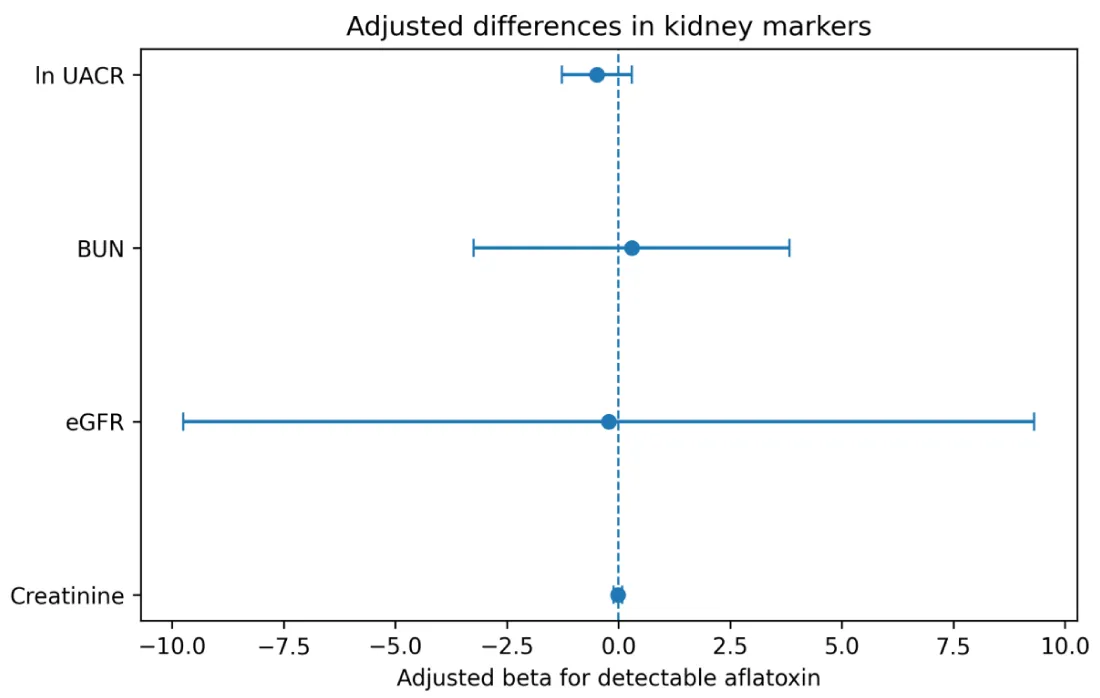
Figure 1: djusted beta estimates for detectable aflatoxin and continuous kidney markers. Note: Points show fully adjusted beta estimates and horizontal bars show 95% confidence intervals. Outcomes are displayed in native units, so beta magnitudes are not directly comparable across outcomes.
Binary kidney outcomes
The presence of aflatoxin B1, detected in the serum, was not significantly related to standardized serum creatinine, eGFR, BUN, and natural log UACR in adjusted weighted linear regression models. All adjusted beta coefficients were small, and all 95% confidence intervals crossed the null value. While the direction of association varied across outcomes, there was no consistent pattern of worse kidney function among participants with detectable aflatoxin. Because only 14 detectable participants were included in complete-case adjusted models, estimate precision and power are limited; findings should be interpreted cautiously.
Weighted binary outcome estimates were highly sensitive to individual participant weights because only 16 adults were included in the detectable aflatoxin group. Accordingly, the unweighted cases/total and the weighted risk estimates are shown in Table 4 and Figure 2. The unweighted counts are the most transparent way to describe the observations in the data. The weighted risks are unstable exploratory estimates that should be interpreted with caution.
| Table 4: Binary kidney outcomes by serum aflatoxin B1-lysine detectability. | ||||||
| Outcome | Non-detected cases/total | Detected cases/total | Weighted risk non-detected % | Weighted risk detected % | Crude OR (95% CI) | Fisher p |
| Albuminuria, UACR >=30 mg/g | 175/1222 (14.3%) | 1/16 (6.2%) | 10.72 | 0.29 | 0.58 (0.11-3.11) | 0.715 |
| Reduced eGFR <60 mL/min/1.73 m2 | 105/1236 (8.5%) | 0/16 (0.0%) | 4.76 | 0.00 | 0.33 (0.02-5.46) | 0.388 |
| Albuminuria or eGFR <60 | 231/1242 (18.6%) | 1/16 (6.2%) | 13.04 | 0.29 | 0.42 (0.08-2.27) | 0.331 |
| Note: ORs used Haldane-Anscombe continuity correction because several exposed cells were very small or zero. These estimates are unstable and should be interpreted descriptively. | ||||||
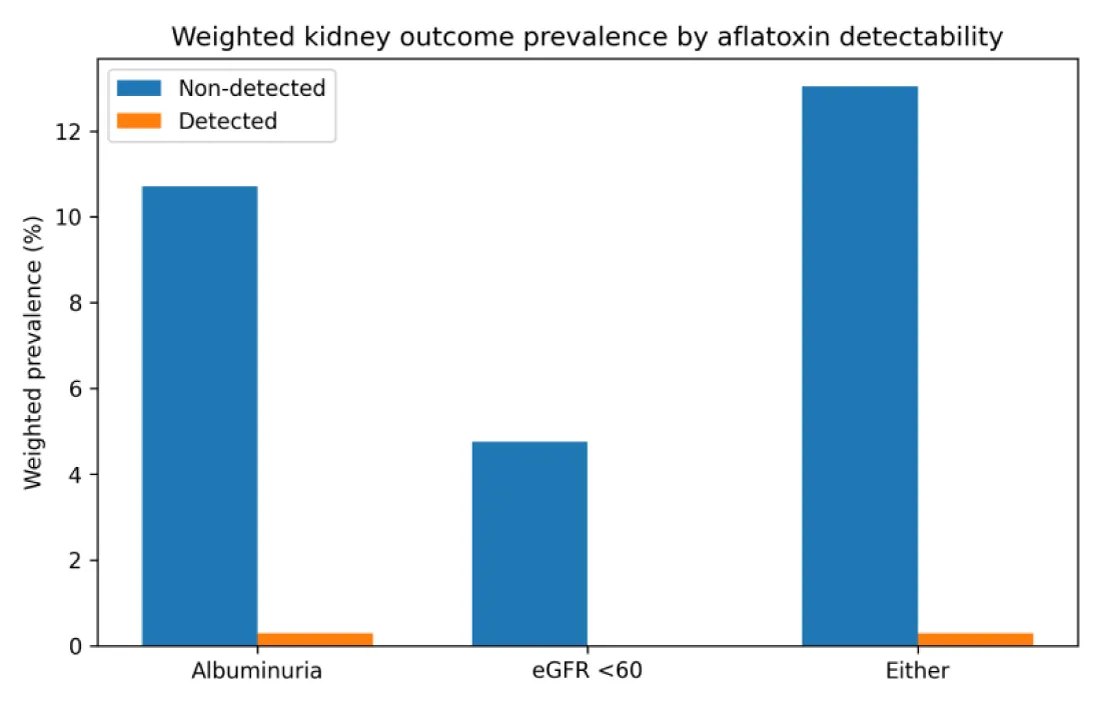
Figure 2: Weighted prevalence of binary kidney outcomes by aflatoxin detectability. Note: Weighted prevalence estimates in the detected group are based on very few participants and should not be interpreted as precise population estimates.
Precision and power assessment
The assessment of precision and power shows that the analysis was mainly limited by the small number of adults with serum aflatoxin B1-lysine above detection (Table 5, Figure 3).
| Table 5: Precision and power assessment | ||
| Metric | Value | Interpretation |
| Exposed adult sample size | 16 | Very small exposed group; adjusted binary models are unstable. |
| Non-exposed adult sample size | 1242 | Large comparison group. |
| Minimum detectable standardized mean difference for 80% power | 0.71 | The study is powered only for large continuous-outcome differences. |
| Approximate albuminuria risk in exposed group needed for 80% power | 45.5% | With only 16 exposed adults, a large binary-outcome difference would be needed. |
| Note: The minimum detectable standardized mean difference was estimated for 80% power at alpha = .05 using the observed exposed-to-non-exposed ratio. | ||
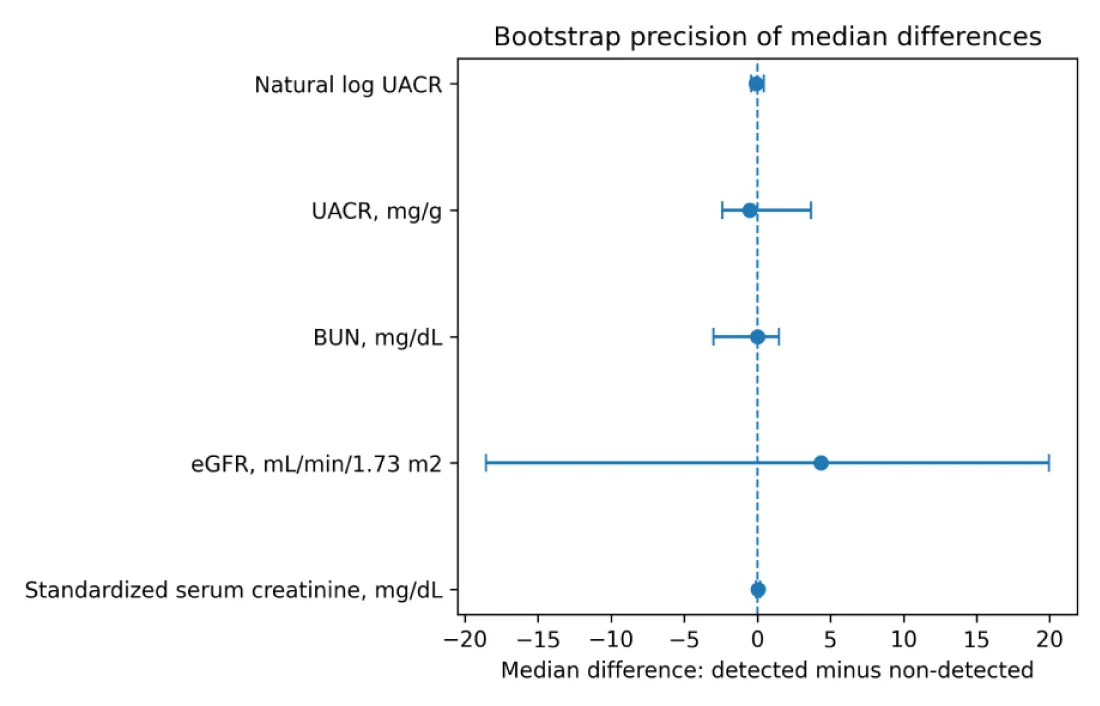
Figure 3: Bootstrap precision of median differences in kidney markers. Note: Median differences are detected minus non-detected values. Intervals were estimated using 5,000 bootstrap replicates.
Despite ample members of the non-detected comparison group, only 16 adults were deemed exposed. The study had an 80% power only to find a large standardized mean difference of about 0.71 for continuous kidney-function markers. Likewise, to provide acceptable power for albuminuria, an estimated prevalence of 45.5% would be needed in the exposed group. The findings suggest that the null associations in the main analyses could be considered inconclusive rather than evidence of no renal effect.
Principal findings
In this exploratory analysis of NHANES 1999-2000, adults with detectable serum aflatoxin B1-lysine were uncommon and not associated with worse kidney-function markers. Among adults with detectable aflatoxin, adjusted models did not reveal higher creatinine, lower eGFR, higher BUN, or higher log-UACR. Detectable participants did not have more frequent binomial indicators of albuminuria, reduced estimated GFR or single visit kidney abnormality. Thus, the most appropriate interpretation is a null or inconclusive finding in an underpowered U.S. sample at low-exposure.
The results should not be taken to mean aflatoxin is incapable of causing kidney damage. According to experimental studies, it is theoretically possible that aflatoxin B1 exposure can cause oxidative stress, apoptosis, activate inflammatory pathways, and lead to changes in renal injury markers [8,10-12]. Nonetheless, the exposure distribution in the NHANES 1999-2000 study varied significantly from high-exposure regions and experimental dosing models. Due to the 16 detectable adults in this set of data it is not possible to reject smaller in renal signals.
This research also helps distinguish between biological plausibility and population evidence. Aflatoxin – a well-established liver cancer-causing foodborne toxin – offers no evidence to support its kidney toxicity in human beings. The nephrotoxicity literature of ochratoxin A is more established and it has been more contextually discussed about endemic nephropathy and urinary tract tumors [15-18]. For future investigations on mycotoxins and kidneys, aflatoxin and ochratoxin A should be measured together and heavy metals, diabetes, hypertension, dehydration, income and diet should also be considered.
Strengths
The research utilized a direct measure of aflatoxin exposure in serum instead of relying on food-frequency or ecological exposure assumptions. This utilizes public NHANES data, standardized creatinine calibration, race-free CKD-EPI 2021 eGFR estimation, UACR, and several kidney outcome definitions. To ensure transparency and reproducibility, we have made all files public.
Limitations
The study is not without limitation. The cross-sectional design prevents causal inference. In addition, aflatoxin exposure was measured once only whereas kidney disease is usually a product of chronic processes, and CKD diagnosis requires chronicity for at least 3 months. Another reason for the instability of the adjusted binary models is the very small number of detectable adult cases, making the analysis underpowered. Analysis was therefore unable to consider co-exposure to ochratoxin A or other relevant nephrotoxic environmental agents. Fifth, diabetes, hypertension, drug use, food intake, and comorbid liver disease residual confounding is likely. Weighted regression was used for exploratory estimation in the sixth stage; however, additional design-based variance estimation is likely needed for journal submission according to standards set by NHANES analytic. In the end, the low exposure sample from the U.S may not apply to regions where dietary aflatoxin exposure is higher and more sustained.
The strategy that limits adjustments has an important limitation. The models were adjusted for age, sex, race/ethnicity and poverty–income ratio, but the analyses could not be fully adjusted for major renal confounders, including diabetes, hypertension, nephrotoxic medication use, diet, liver disease, heavy metals, ochratoxin. A and other environmental nephrotoxic exposures. This study is most accurately interpreted as a descriptive exploratory analysis rather than a causal assessment of aflatoxin-related kidney injury.
Public health and research implications
The unqualified exploration result does not lessen the significance of prevention of aflatoxins. Due to the well-documented public health risk posed by aflatoxin, food storage, agricultural control, diversification of diets, and vigilant monitoring of aflatoxins must remain a priority. A prospective study in a higher exposure cohort that includes repeated measurements of aflatoxin-albumin adducts, ochratoxin A biomarker, heavy-metal biomarkers, eGFR, UACR, tubular injury markers, and oxidative-stress markers, as well as repeated measurements of the kidneys over time would be the most informative next step for kidney research.
In the 1999-2000 NHANES study, U.S. adults rarely tested positive for detectable serum aflatoxin B1-lysine, and this was not associated with worse metrics of kidney damage or dysfunction, nor a single-visit composite kidney abnormality. Given that the exposed group was tiny, the study should be seen as an exploratory, underpowered human analysis rather than definitive evidence against aflatoxin-related renal toxicity. Longitudinal studies with repeated mycotoxin and kidney biomarkers at higher exposures are needed into the future.
- Mahato DK, Lee KE, Kamle M, Devi S, Dewangan KN, Kumar P, et al. Aflatoxins in Food and Feed: An Overview on Prevalence, Detection and Control Strategies. Frontiers in microbiology. 2019 10: 2266. Available from: https://doi.org/10.3389/fmicb.2019.02266
- Hamid AS, Tesfamariam IG, Zhang Y, Zhang ZG. Aflatoxin B1-induced hepatocellular carcinoma in developing countries: Geographical distribution, mechanism of action and prevention. Oncology letters. 2013; 5(4): 1087–1092. Available from: https://doi.org/10.3892/ol.2013.1169
- Liu Y, Wu F. Global burden of aflatoxin-induced hepatocellular carcinoma: A risk assessment. Environmental Health Perspectives. 2010; 118(6): 818-824. Available from: https://doi.org/10.1289/ehp.0901388
- Wild CP, Gong YY. Mycotoxins and human disease: A largely ignored global health issue. Carcinogenesis. 2010; 31(1): 71-82. Available from: https://doi.org/10.1093/carcin/bgp264
- Kensler TW, Roebuck BD, Wogan GN, Groopman JD. Aflatoxin: A 50-year odyssey of mechanistic and translational toxicology. Toxicological Sciences. 2011; 120(Suppl. 1): S28-S48. Available from: https://doi.org/10.1093/toxsci/kfq283
- International Agency for Research on Cancer. Aflatoxins. In A review of human carcinogens: Chemical agents and related occupations (IARC Monographs on the Evaluation of Carcinogenic Risks to Humans, Vol. 100F). IARC. 2013;
- Kew MC. Aflatoxins as a cause of hepatocellular carcinoma. Journal of gastrointestinal and liver diseases: JGLD. 2013; 22(3): 305–310.
- Li H, Xing L, Zhang M, Wang J, Zheng N. The toxic effects of aflatoxin B1 and aflatoxin M1 on kidney through regulating L-proline and downstream apoptosis. BioMed Research International. 2018; 2018: 9074861. Available from: https://doi.org/10.1155/2018/9074861
- Yilmaz S, Kaya E, Karaca A, Karatas O. Aflatoxin B1 induced renal and cardiac damage in rats: Protective effect of lycopene. Research in Veterinary Science. 2018; 119: 268-275. Available from: https://doi.org/10.1016/j.rvsc.2018.07.007
- Dlamini NZ, Somboro AM, Amoako DG, Arhin I, Khumalo HM, Khan RB. Toxicogenicity and mechanistic pathways of aflatoxin B1 induced renal injury. Environmental Toxicology. 2021; 36(9): 1857-1872. Available from: https://doi.org/10.1002/tox.23306
- Wang Y, Liu F, Zhou X, Liu M, Zang H, et al. Alleviation of oral exposure to aflatoxin B1-induced renal dysfunction, oxidative stress, and cell apoptosis in mice kidney by curcumin. Antioxidants. 2022; 11(6): 1082. Available from: https://doi.org/10.3390/antiox11061082
- Ofori-Attah E, Hashimoto M, Oki M, Kadowaki D. Therapeutic effect of natural products and dietary supplements on aflatoxin-induced nephropathy. Int J Molecular Sci. 2024; 25(5), 2849. Available from: https://doi.org/10.3390/ijms25052849
- Khoi CS, Chen JH, Lin TY, Chiang CK, Hung KY. Ochratoxin A-Induced Nephrotoxicity: Up-to-Date Evidence. Int J Molecular Sci. 2021; 22(20): 11237. Available from: https://doi.org/10.3390/ijms222011237
- IARC Working Group on the Evaluation of Carcinogenic Risks to Humans. Some Naturally Occurring Substances: Food Items and Constituents, Heterocyclic Aromatic Amines and Mycotoxins. Lyon (FR): International Agency for Research on Cancer; (IARC Monographs on the Evaluation of Carcinogenic Risks to Humans, No. 56.) OCHRATOXIN A. 1993; Available from: https://www.ncbi.nlm.nih.gov/books/NBK513594/
- Fuchs R, Peraica M. Ochratoxin A in human kidney diseases. Food Additives and Contaminants. 2005; 22(Suppl. 1): 53-57. Available from: https://doi.org/10.1080/02652030500309368
- Castegnaro M, Canadas D, Vrabcheva T, Petkova-Bocharova T, Chernozemsky IN, Pfohl-Leszkowicz, A. Balkan endemic nephropathy: role of ochratoxins A through biomarkers. Molecular Nutri & Food Res. 2006; 50(6): 519–529. Available from: https://doi.org/10.1002/mnfr.200500182
- Bui-Klimke TR, Wu F. Ochratoxin A and human health risk: a review of the evidence. Critical Reviews in Food Science and Nutrition. 2015; 55(13): 1860–1869. Available from: https://doi.org/10.1080/10408398.2012.724480
- Malir F, Ostry V, Pfohl-Leszkowicz A, Novotna E, Toman J. Ochratoxin A: 50 years of research. Toxins. 2016; 8(7): 191. Available from: https://doi.org/10.3390/toxins8070191
- Schleicher RL, McCoy LF, Powers CD, Sternberg MR, Pfeiffer CM. Serum concentrations of an aflatoxin-albumin adduct in the National Health and Nutrition Examination Survey (NHANES) 1999-2000. Clinica Chimica Acta. 2013; 423; 46-50. Available from: https://doi.org/10.1016/j.cca.2013.04.011
- Centers for Disease Control and Prevention. National Health and Nutrition Examination Survey. 2024; Available from: https://www.cdc.gov/nchs/nhanes/index.html
- Centers for Disease Control and Prevention, National Center for Health Statistics. Albumin & creatinine - urine (LAB16): NHANES 1999-2000. 2002a; Available from: https://wwwn.cdc.gov/Nchs/Data/Nhanes/Public/1999/DataFiles/LAB16.htm
- Centers for Disease Control and Prevention, National Center for Health Statistics. Standard biochemistry profile & hormones (LAB18): NHANES 1999-2000. 2002b; Available from: https://wwwn.cdc.gov/Nchs/Data/Nhanes/Public/1999/DataFiles/LAB18.htm
- Centers for Disease Control and Prevention, National Center for Health Statistics. Demographic variables and sample weights (DEMO): NHANES 1999-2000. 2009; Available from: https://wwwn.cdc.gov/nchs/nhanes/search/datapage.aspx?Component=Demographics&Cycle=1999-2000
- Centers for Disease Control and Prevention, National Center for Health Statistics. Aflatoxin B1-lysine - serum (surplus) (SSAFB_A): NHANES 1999-2000. 2022; Available from: https://wwwn.cdc.gov/Nchs/Data/Nhanes/Public/1999/DataFiles/SSAFB_A.htm
- Selvin E, Manzi J, Stevens LA, Van Lente F, Lacher DA, Levey AS, et al. Calibration of serum creatinine in the National Health and Nutrition Examination Surveys (NHANES) 1988-1994, 1999-2004. Am J Kidney Dis. 2007; 50(6): 918-926. Available from: https://doi.org/10.1053/j.ajkd.2007.08.020
- Inker LA, Eneanya ND, Coresh J, Tighiouart H, Wang D, et al. New Creatinine- and Cystatin C-Based Equations to Estimate GFR without Race. The New Engl J Med. 2021; 385(19), 1737–1749. Available from: https://doi.org/10.1056/NEJMoa2102953
- Kidney Disease: Improving Global Outcomes (KDIGO) CKD Work Group. KDIGO 2024 Clinical Practice Guideline for the Evaluation and Management of Chronic Kidney Disease. Kidney international. 2024; 105(4S): S117–S314. Available from: https://doi.org/10.1016/j.kint.2023.10.018
- Alshannaq A, Yu JH. Occurrence, Toxicity, and Analysis of Major Mycotoxins in Food. Int J of Environ Res and Pub Health. 2014; 14(6): 632. Available from: https://doi.org/10.3390/ijerph14060632
- Johnson CL, Paulose-Ram R, Ogden CL, Carroll MD, Kruszon-Moran D, et al. National health and nutrition examination survey: analytic guidelines, 1999-2010. Vital and health statistics. Series 2, Data evaluation and Methods Research. 2013; (161), 1–24.
- Scholl PF, Turner PC, Sutcliffe AE, Sylla A, Diallo MS, Friesen MD, et al. Quantitative comparison of aflatoxin B1 serum albumin adducts in humans by isotope dilution mass spectrometry and ELISA. Cancer Epidemiology, Biomarkers & Prevention. 2006; 15(4): 823-826. Available from: https://doi.org/10.1158/1055-9965.EPI-05-0890
- World Health Organization. Mycotoxins. 2023; Available from: https://www.who.int/news-room/fact-sheets/detail/mycotoxins