
More Information
Submitted: June 25, 2026 | Accepted: July 01, 2026 | Published: July 02, 2026
Citation: Ktata MA, Toumi S, Agrebi I, Chaker H, Dammak N, Abid H, et al. Acute Kidney Injury in a Nephrology Setting in Tunisia: A 5-Year Retrospective Study. J Clini Nephrol. 2026; 10(7): 58-69. Available from:
https://dx.doi.org/10.29328/journal.jcn.1001177
DOI: 10.29328/journal.jcn.1001177
Copyright license: © 2026 Ktata MA, et al. This is an open access article distributed under the Creative Commons Attribution License, which permits unrestricted use, distribution, and reproduction in any medium, provided the original work is properly cited.

Acute Kidney Injury in a Nephrology Setting in Tunisia: A 5-Year Retrospective Study
Mohamed Amine Ktata1,2* , Salma Toumi1,2, Ikram Agrebi1,2, Hanen Chaker1,2, Najla Dammak1,2, Hanen Abid1,2, Soumaya Yaich1,2 and Khawla Kammoun1,2
1Nephrology, Dialysis and Renal Transplantation Department, Hedi Chaker Hospital, Sfax, Tunisia
2Renal pathology laboratory LR19ES11, faculty of medicine of Sfax, Sfax, Tunisia
*Corresponding author: Mohamed Amine Ktata, Imem Sahnoun avenue, Gremda, Sfax, Tunisia, Tunisia, Email: [email protected]
Background and hypothesis: Acute kidney injury (AKI) is a common condition associated with significant morbidity and mortality. Data regarding its epidemiological and prognostic characteristics in Tunisia remain limited. This study aimed to describe the clinical features, etiologies, and outcomes of AKI among hospitalised patients and to identify factors associated with renal prognosis, recurrence, and mortality.
Methods: We conducted a retrospective, monocentric, descriptive, and analytical study including all patients hospitalised for AKI in the nephrology department of Hedi Chaker University Hospital (Sfax, Tunisia) over 5 years (2015–2019). Demographic, clinical, biological, radiological, and therapeutic data were collected. Statistical analyses included univariate and multivariate models to identify prognostic factors.
Results: A total of 503 patients were included, with a mean age of 67.9 ± 16.5 years; 52.1% were female. Hypertension (71.4%), diabetes (49.5%), and chronic kidney disease (55.9%) were the most common comorbidities. Functional AKI was the most frequent type, mainly due to hypovolemia. Organic AKI accounted for 46.9% of cases, with acute interstitial nephritis predominating. Hemodialysis was required in 29.8% of patients. At discharge, 27.2% progressed to chronic kidney disease. At 5 years, CKD progression occurred in 40.6% and end-stage kidney disease in 20.3%. AKI recurrence occurred in 23.1%, and mortality was 11.1%. In multivariate analysis, pre-existing chronic kidney disease was independently associated with recurrence and poor renal survival, while hemodialysis was protective against recurrence.
Conclusion: AKI in nephrology settings is associated with a high burden of chronic complications and recurrence. Chronic kidney disease is a major determinant of renal prognosis.
Acute kidney injury (AKI) is defined as a sudden and potentially reversible decline in renal function, leading to the accumulation of nitrogenous waste products and disturbances in electrolyte and acid–base balance, which may be life-threatening.
AKI represents a major public health issue, affecting approximately 13.3 million individuals worldwide each year, with nearly 85% of cases occurring in developing countries where access to healthcare remains limited [1]. In North Africa, the prevalence of AKI is estimated at around 0.7%; however, this figure is likely underestimated due to the lack of comprehensive epidemiological data [1].
In Tunisia, data on AKI remain scarce. Available studies are limited to a few monocentric and retrospective analyses, mainly conducted in intensive care units [2] or focusing on specific age groups [3]. To date, there is a lack of global studies addressing the epidemiological, etiological, and evolutionary profile of AKI in nephrology settings.
Recent studies have demonstrated that the impact of AKI is not restricted to the acute phase. Indeed, AKI survivors are at increased risk of developing chronic kidney disease (CKD), as well as cardiovascular complications, impaired quality of life, and increased early mortality [4,5].
Furthermore, AKI is associated with a significant economic burden due to frequent and prolonged hospitalisations. The risk of recurrence and long-term complications highlights the importance of early diagnosis and appropriate management, aiming to reduce its overall impact.
In this context, and given the absence of large-scale national data, we conducted a retrospective study over 5 years to better characterise AKI in our population. The objectives of this study were to describe the clinical and diagnostic features of patients, identify the main etiologies of AKI, analyse patient outcomes, and determine factors associated with progression to chronic kidney disease.
Study design and setting
We conducted a retrospective, monocentric, descriptive, and analytical study including patients hospitalised for acute kidney injury (AKI) in the nephrology department of Hedi Chaker University Hospital, Sfax, Tunisia. The study period extended over 5 years, from January 2015 to December 2019.
Study population
Inclusion criteria
All patients admitted to the adult nephrology department for AKI during the study period were included.
Non-inclusion criteria
Patients hospitalised for AKI in other departments of the same institution, and those with incomplete or non-exploitable medical records, as well as transplanted patients with AKI, were not included.
Data collection
Data were retrospectively extracted from medical records and hospital databases. The following variables were collected: Demographic, medical history, clinical presentation (circumstances of AKI occurrence), biological parameters serum creatinine, electrolytes), and therapeutic management.
Statistical analysis
Statistical analysis was performed using IBM SPSS Statistics version 29.
Continuous variables were expressed as mean ± standard deviation, and categorical variables as frequencies and percentages.
Comparisons were performed using Student’s t-test or receiver operating characteristic (ROC) curve analysis for continuous variables and the chi-square test for categorical variables.
Factors associated with renal outcomes were assessed using logistic regression analysis, while long-term renal survival was evaluated using Kaplan–Meier analysis.
The discriminative performance of clinical and biological parameters was assessed by calculating the area under the ROC curve (AUC).
A two-sided p - value < 0.05 was considered statistically significant.
Outcomes
The main outcomes assessed were:
- Renal function recovery at discharge
- Mid-term and long-term renal outcomes (6 months, 1 year, and 5 years): Progression to chronic kidney disease and end-stage kidney disease, recurrence of AKI, and mortality.
Definitions
Acute Kidney Injury (AKI): Per KDIGO, AKI is defined as an abrupt decline in renal function, manifested by a rapid rise in serum creatinine and/or reduced urine output. The 2012 KDIGO guidelines classify AKI by severity based on creatinine rise or diuresis [6].
Chronic Kidney Disease (CKD): Per KDIGO 2012, CKD is defined as a structural or functional renal abnormality persisting for ≥3 months [7].
Criteria for renal function recovery: Complete recovery – return to baseline creatinine (if pre-existing CKD) or complete normalisation (if prior normal renal function) [9,10].
Partial recovery: a ≥50% decrease in creatinine from the admission value [9,10].
Demographic data, comorbidities, and circumstances of onset
Between 2015 and 2019, 503 patients were hospitalised in the nephrology department of the Hédi Chaker University Hospital in Sfax for a first episode of acute kidney injury (AKI). The population was elderly, with a mean age of 67.9 ± 16.5 years (range: 18 to 96 years). Patients aged 60 years and older accounted for 76.1% of the total cohort, while 20.3% were in the 30–60 age group and 3.6% were under 30 years of age. The gender distribution was nearly balanced, with a slight female predominance (52.1% women) corresponding to a male-to-female sex ratio of 0.91 (Table 1).
The comorbidity profile was dominated by hypertension (HTN), present in 71.4% of patients, and diabetes found in 49.5% of cases (97.6% of which were type 2). Pre-existing chronic kidney disease (CKD) was documented in 55.9% of the cohort, predominantly at stages 3 (24.0%) and 4 (31.0%). The underlying causes of this CKD were dominated by chronic tubulointerstitial nephropathy in 37.6% of cases, followed by diabetic nephropathy (28.7%), vascular nephropathy, and ischemic nephropathy (8.5% each). Cardiac conditions were present in 18.9% of patients, with a predominance of ischemic heart disease (13.7%). Among the 50 patients with heart failure, the left ventricular ejection fraction (LVEF) was preserved in 9 patients, moderately impaired in 21, and severely impaired in 20.
The most frequently identified circumstances of onset were infectious in 54.7% of cases, gastrointestinal (diarrhoea or vomiting) in 30.6%, and related to the injection of iodinated contrast media (ICM) in 5.7% of cases. The use of nonsteroidal anti-inflammatory drugs (NSAIDs) preceded the episode in 5.6% of cases. Among treatments before the episode of AKI, renin-angiotensin system blockers (RASBs) were used in 49.5% of patients (ACE inhibitors: 34.8%; ARBs: 14.9%), diuretics in 51.1%, beta-blockers in 43.5%, and calcium channel blockers in 33.4% (Table 1).
| Table 1:Demographic characteristics, comorbidities, and circumstances surrounding the onset of AKI (n = 503) | |
| Variable | Frequency (%) or Mean ± SE |
| Age (years) | 67.9 ± 16.5 |
| < 30 years | 3.6% |
| [30–60 years] | 20.3% |
| 60 years and older | 76.1% |
| Gender (Male/Female) | 47.9 / 52.1 |
| Hypertension | 71.4% |
| Diabetes (97.6% of which is type 2) | 49.5% |
| Pre-existing CKD | 55.9% |
| Stage 1 | 0.4% |
| Stage 2 | 0.8% |
| Stage 3 | 24.0% |
| Stage 4 | 31.0% |
| Underlying heart disease | 18.9% |
| Ischemic | 13.7% |
| Rhythmic | 2.2% |
| Circumstances of onset | |
| Infection | 54.7% |
| Digestive disorders | 30.6% |
| Iodinated PDC injection | 5.7% |
| NSAIDs | 5.6% |
| Surgery | 4.4% |
| Pre-IRA treatments | |
| ACE inhibitors | 34.8% |
| ARAII | 14.9% |
| Diuretics | 51.1% |
| Beta-blockers | 43.5% |
| Calcium channel blockers | 33.4% |
| Combination of BSRA and diuretic | 29.6% |
| SD: standard deviation; HTN: hypertension; CKD: chronic kidney disease; IOM: iodinated contrast medium; NSAIDs: nonsteroidal anti-inflammatory drugs; ACEIs: angiotensin-converting enzyme inhibitors; ARBs: angiotensin II receptor blockers; RAAS inhibitors: renin-angiotensin system inhibitors. | |
Clinical, laboratory, and immunological findings
At admission, hypotension was present in 33.8% of cases. Regarding hydration status, signs of extracellular dehydration were observed in 47.5% of cases and fluid overload in 35.8%, including lower extremity oedema (34.6%) and acute pulmonary oedema (12.5%). Oligo-anuria was reported in 22.9% of cases.
Biochemically, the mean serum creatinine level at admission was 445.7 ± 302.1 µmol/L (range: 83–2500 µmol/L), blood urea of 29.9 ± 15.5 mmol/L, and a mean glomerular filtration rate (GFR) of 16.1 ± 12.3 mL/min/1.73 m² (range: 1.2–66.3 mL/min/1.73 m²). Urinary sediment analysis revealed a mean proteinuria of 1.5 ± 2.0 g/24h, with microscopic hematuria in 45 patients and aseptic leukocyturia in 12 patients. Nephrotic syndrome was documented in 27 cases (5.4%).
The most frequently observed metabolic abnormalities included hypocalcemia (55.7%), metabolic acidosis (46.5%, of which 2.6% was severe), hyperkalemia (21.5%, of which 10% was severe), and elevated CRP ≥ 6 mg/L (73.3%) (Table 2).
| Table 2: Metabolic and immunological abnormalities at admission | |
| Metabolic abnormalities | Frequencies (%) |
| Hypokalemia | 8.2 |
| Hyperkalemia | 21.5 |
| Severe hyperkalemia (≥6.5mmol/l) | 10 |
| Metabolic acidosis | 46.5 |
| Severe metabolic acidosis (pH≤7.10 or HCO3¯≤10mmol/l) | 2.6 |
| Hypocalcemia | 55.7 |
| Reverse natriuresis/kaliuresis | 29.8 |
| CPK > 1000 IU/L | 12.7 |
| CRP > 6 | 73.3 |
| Elevated troponin | 5.6 |
| Elevated pro-BNP | 2 |
| Protein level < 65 g/L | 38.2 |
| Albumin < 35 g/L | 40.7 |
| Immunological abnormalities | Frequency (%) |
| Positive ANA | 4.6 |
| Positive anti-DNA | 1.4 |
| Positive ANCA | 0.6 |
| Positive anti-MBG | 0.4 |
| Low C3 | 1.4 |
| Low C4 | 1 |
| Gamma globulin < 7 g/L | 7.2 |
| Monoclonal gammaglobulin peak | 4.8 |
| CPK: Creatine phosphokinase, CRP: C-reactive protein, Pro-BNP: Pro-Brain Natriuretic Peptide ANA: Antinuclear antibodies; DNA: Deoxyribonucleic acid; ANCA: Anti-neutrophil cytoplasmic antibodies; MBG: Glomerular basement membrane |
|
Hematologically, anaemia was found in 405 patients (80.5%). Signs of microangiopathic hemolysis (schizocytosis > 1% and/or haptoglobin < 0.3 g/L) were identified in 7 and 6 patients, respectively.
Immunological testing was performed on 115 patients. Among the abnormalities noted (Table 2), the most significant included: positive antinuclear antibodies (ANA) in 23 patients, a monoclonal gamma globulin peak in 24, hypogammaglobulinemia < 7 g/L in 36 cases, positive ANCA in 3 patients, and anti-glomerular basement membrane (anti-GBM) antibodies in 2 patients.
A renal ultrasound was performed in 140 patients (27.8%), and a non-contrast abdominal CT scan was performed in 20 patients. The main abnormalities found included hypoplastic kidneys in 18.5% of cases and ureteropelvic-caliceal dilatation in 6.7% of cases (Table 9). A transthoracic echocardiogram was performed in 148 patients (24.9%); the most common abnormalities were pulmonary hypertension (20.0%), valvular heart disease (19.3%), elevated left ventricular filling pressures (17.9%), and diastolic dysfunction (17.3%).
A renal biopsy was performed in 47 patients (9.3% of the cohort), with the main indications being the presence of extrarenal signs associated with AKI or proteinuria (n = 16), isolated proteinuria with or without hematuria (n = 13), unexplained AKI (n = 10), and absence or incomplete recovery of renal function (n = 5). The histological findings are presented in Table 3.
| Table 3: Renal biopsy results | |
| Results | Sample size |
| Minimal glomerular lesion (MGL) | 1 |
| Extramembranous glomerulonephritis (EMG) | 4 |
| IgA nephropathy (IgAN) | 3 |
| Lupus nephropathy (Lupus nephropathy) | 4 |
| Type 1 CEGN | 1 |
| Type 2 extracapillary glomerulonephritis (ECG2) | 4 |
| Type 3 GNEC | 1 |
| Diabetic nephropathy | 4 |
| Benign nephrosclerosis | 1 |
| Membrano-proliferative glomerulonephritis (MPGN) | 3 |
| Acute tubular necrosis (ATN) | 5 |
| Acute interstitial nephritis (AIN) | 3 |
| Acute glomerulonephritis (AGN) | 1 |
| AA amyloidosis | 2 |
| AL amyloidosis | 4 |
| Polyarteritis nodosa (PAN) | 2 |
| Advanced kidney disease | 2 |
The distribution according to KDIGO stages showed severe stage 3 AKI in 57.1% of patients, stage 2 in 34.2%, and stage 1 in 8.7%. Regarding the types of ARF, functional ARF was the most common (76.1% of cases), dominated by true hypovolemia (47.1%), cardiorenal syndrome (21.0%), and medications interfering with renal hemodynamics (7.9%). Organic AKI was found in 236 patients (46.9%), the main causes of which were acute interstitial nephritis, non-infectious acute kidney injury (45 cases, including 24 iatrogenic cases and 14 related to paracentesis), and acute glomerular nephropathies (32 cases). Multifactorial AKI accounted for 25.8% of cases, and obstructive AKI for 4.4%.
Treatments received during hospitalisation
Therapeutic management was tailored to the aetiology of the ARF and the severity of the clinical presentation. Fluid resuscitation with crystalloids was required in 61.5% of cases, and red blood cell transfusion in 45 patients (8.9%). Intravenous diuretics (furosemide) were prescribed in 171 patients (34.0%), at an average dose of 276.8 ± 277.8 mg/day for an average duration of 6.8 ± 4.7 days. Vasopressors were required in 7.9% of cases.
Extrarenal epuration was required in 150 patients (29.8%), in the form of hemodialysis with an average of 3.1 ± 3.3 sessions per patient, and in 3 patients in the form of plasma exchanges (average: 7.7 ± 10.7 sessions). A stay in the intensive care unit (ICU) was required in 5.4% of cases (n = 27).
Renal function, recurrence, and mortality
Changes in renal function were documented at hospital discharge, then at 6 months, 1 year, and 5 years after the index episode (Table 4). At discharge, the mean serum creatinine level was 271.6 ± 217.5 µmol/L, with a mean eGFR of 35.4 ± 33.3 mL/min/1.73 m². Complete recovery of renal function was observed in 54.9% of patients, partial recovery in 27.2%, and progression to end-stage chronic kidney disease (ESCD) requiring dialysis in 18.0% of patients (n = 91).
| Table 4: Longitudinal changes in renal function following an episode of AKI | ||||
| Follow-up time | Mean creatinine (µmol/L) | Mean GFR (ml/min/1.73 m²) | Progression to CKD (%) | Progression to CKD (%) |
| At discharge | 271.6 ± 217.5 | 35.4 ± 33.3 | 27.2 | 18.0 |
| At 6 months | 231.5 ± 248.9 | 41.0 ± 32.7 | 23.4 | 11.1 |
| At 1 year | 248.4 ± 201.6 | 36.6 ± 28.2 | 31.8 | 9.6 |
| At 5 years | 299.6 ± 273.7 | 34.4 ± 29.2 | 40.6 | 20.3 |
| GFR: Glomerular filtration rate; CKD: Chronic kidney disease; ESRD: End-stage renal disease. | ||||
Mid-term follow-up showed an initial improvement in renal function at 6 months (serum creatinine: 231.5 ± 248.9 µmol/L; eGFR: 41.0 ± 32.7 mL/min/1.73 m²), although the number of patients followed up had decreased to 171 (33.9%). At 1 year of follow-up (n = 114, or 22.7% of the initial cohort), serum creatinine was 248.4 ± 201.6 µmol/L and the mean eGFR was 36.6 ± 28.2 mL/min/1.73 m². The proportion of patients who developed CKD in the medium term was 23.4% at 6 months and 31.8% at 1 year. The rates of progression to end-stage renal disease (ESRD) at these same time points were 11.1% and 9.6%, respectively.
At long-term follow-up (5 years), 69 patients (13.7%) were followed, with a mean serum creatinine level of 299.6 ± 273.7 µmol/L and a mean GFR of 34.4 ± 29.2 mL/min/1.73 m². The cumulative prevalence of CKD at 5 years was 40.6%, and that of acute kidney injury (AKI) was 20.3%.
A recurrence of AKI was documented in 116 patients (23.1%), with a mean of 2.5 ± 0.8 recurrent episodes. Overall mortality during follow-up was 11.1% (n = 56), with a mean time from the episode of AKI to death of 14.2 ± 20.8 days. The leading causes of death were cardiovascular failure (33 patients), respiratory failure (18 patients), and neurological failure (5 patients).
Baseline characteristics were compared between patients with and without available 5-year follow-up (Table 5). Patients retained at 5 years were significantly younger than those lost to follow-up (62.5 ± 17.4 vs. 68.8 ± 16.3 years, p = 0.002) and more frequently had hypertension (84.1% vs. 69.4%, p = 0.014). Infection-related AKI was less common (37.7% vs. 57.6%, p = 0.03), whereas chemotherapy-associated AKI was more frequent (5.8% vs. 1.2%, p = 0.024). Patients with long-term follow-up also presented with less severe AKI, as reflected by a lower KDIGO stage (p < 0.001), a lower requirement for hemodialysis (7.2% vs. 33.4%, p < 0.001), and less frequent catecholamine use (1.4% vs. 9.0%, p = 0.029). No significant differences were observed regarding sex, diabetes, pre-existing chronic kidney disease, duration of hospitalisation, organic or obstructive AKI, or pre-admission medications.
| Table 5: Comparison of baseline characteristics between patients with no follow-up and those with available 5-year follow-up | |||
| Baseline characteristics | Lost to 5-year follow-up (n = 434) | Available 5-year follow-up (n = 69) | p |
| Age (years), mean ± SD | 68.8 ± 16.3 | 62.5 ± 17.4 | 0.002 |
| Male/Female (%) | 53.2 / 46.8 | 44.9 / 55.1 | 0.24 |
| Hypertension | 69.4 | 84.1 | 0.014 |
| Diabetes mellitus | 47.9 | 59.4 | 0.09 |
| Pre-existing chronic kidney disease (CKD) | 55.1 | 62.3 | 0.29 |
| CKD stage (%) | < 0.001 | ||
| Stage 1 | 0.2 | 1.4 | – |
| Stage 2 | 0.0 | 5.8 | – |
| Stage 3 | 22.1 | 36.2 | – |
| Stage 4 | 32.9 | 18.8 | – |
| Underlying nephropathy in patients with CKD (%) | 0.48 | ||
| Chronic glomerular nephropathy | 2.5 | 4.3 | – |
| Chronic tubulointerstitial nephropathy | 20.7 | 23.2 | – |
| Vascular nephropathy | 4.1 | 8.7 | – |
| Diabetic nephropathy | 16.4 | 14.5 | – |
| Ischemic nephropathy | 5.1 | 2.9 | – |
| Polycystic kidney disease | 0.7 | 0.0 | – |
| Undetermined nephropathy | 4.6 | 5.8 | – |
| Amyloidosis | 0.7 | 2.9 | – |
| Precipitating factors for AKI (%) | |||
| Infection | 57.6 | 37.7 | 0.03 |
| Surgery | 4.6 | 2.9 | 0.75 |
| Gastrointestinal disorders | 31.3 | 24.6 | 0.48 |
| Hemorrhage | 3.5 | 1.4 | 0.71 |
| Iodinated contrast media exposure | 2.3 | 5.8 | 0.11 |
| Coronary angioplasty | 2.3 | 5.8 | 0.11 |
| Nonsteroidal anti-inflammatory drugs (NSAIDs) | 5.5 | 10.1 | 0.17 |
| Chemotherapy | 1.2 | 5.8 | 0.024 |
| AKI type (%) | |||
| Functional AKI | 78.1 | 63.8 | 0.014 |
| Intrinsic AKI | 45.9 | 53.6 | 0.10 |
| Obstructive AKI | 4.8 | 1.4 | 0.33 |
| Multifactorial AKI | 27.0 | 18.8 | 0.019 |
| KDIGO AKI stage (%) | <0.001 | ||
| Stage 1 | 6.9 | 20.3 | |
| Stage 2 | 30.6 | 56.5 | |
| Stage 3 | 62.4 | 23.2 | |
| Hemodialysis requirement | 33.4 | 7.2 | <0.001 |
| Catecholamine use | 9.0 | 1.4 | 0.029 |
| Length of hospital stay (%) | 0.46 | ||
| <15 days | 75.8 | 82.6 | |
| 15–30 days | 17.7 | 13.0 | |
| >30 days | 6.5 | 4.3 | |
| Pre-admission medications (%) | |||
| ACE inhibitors | 32.9 | 46.4 | 0.93 |
| Angiotensin II receptor blockers (ARBs) | 14.1 | 20.3 | 0.10 |
| Calcium channel blockers | 32.0 | 42.0 | 0.13 |
| Beta-blockers | 44.7 | 36.2 | 0.19 |
| Diuretics | 51.4 | 49.3 | 0.79 |
| Combination of ≥2 diuretics | 10.1 | 2.9 | 0.25 |
Subgroup analyses according to the primary infection type demonstrated significant differences in renal recovery (p = 0.001) and mortality (p = 0.004), whereas progression to chronic kidney disease did not differ significantly among infection subgroups (p = 0.40) (Table 6). Patients with pulmonary infections had the highest mortality, while renal recovery was most frequently observed in patients with urinary tract infections.
| Table 6: Renal Outcomes According to Primary Infection Type | |||
| Primary infection type | Renal recovery | Mortality | Progression to ESKD |
| Urinary | 20/134 (14.9%) | 36/134 (26.9%) | 38/134 (28.4%) |
| Pulmonary | 7/72 (9.7%) | 22/72 (30.6%) | 12/72 (16.7%) |
| Gastrointestinal | 2/29 (6.9%) | 2/29 (6.9%) | 1/29 (3.4%) |
| Other | 7/40 (17.5%) | 5/40 (12.5%) | 3/40 (7.5%) |
| P-value | 0.001 | 0.004 | 0.40 |
The effects of key therapeutic interventions on long-term outcomes were evaluated using multivariable logistic regression analyses. Pre-admission use of renin–angiotensin system inhibitors was not independently associated with mortality (adjusted OR 0.48, 95% CI 0.21–1.12; p = 0.088) and showed no significant association with renal recovery or AKI recurrence. Diuretic therapy administered during hospitalisation was independently associated with a lower likelihood of renal recovery (adjusted OR 0.33, 95% CI 0.14–0.75; p = 0.008), whereas no significant association was observed with AKI recurrence. Although higher diuretic doses were associated with poorer renal recovery and higher mortality in univariate analyses, these associations were no longer significant after multivariable adjustment (renal recovery: adjusted OR 1.003, 95% CI 1.000–1.006; p = 0.069; mortality: adjusted OR 1.001, 95% CI 0.999–1.003; p = 0.413).
Risk factors associated with recurrence of AKI
In univariate analysis, age, sex, stage of ARF at admission, type of ARF, and length of hospital stay were not significantly associated with the risk of recurrence (p > 0.05) for all these variables. In contrast, the presence of hypertension (p = 0.02), pre-existing chronic kidney disease (CKD) (p < 0.001), the use of hemodialysis (HD) during the index episode (p < 0.001), and the use of catecholamines (p = 0.04) were factors associated with recurrence in univariate analysis.
In multivariate analysis (Table 7), only two independent factors were identified: pre-existing CKD was an independent risk factor for recurrence (OR = 2.65; 95% CI [1.64–4.28]; p < 0.001), whereas the use of hemodialysis during the initial episode appeared to be a significant protective factor (OR = 0.35; 95% CI [0.20–0.61]; p < 0.001).
| Table 7: Multivariate analysis of independent factors for AKI recurrence | |||
| Variable | Odds Ratio | 95% CI | p |
| Pre-existing CKD | 2.65 | [1.64 – 4.28] | < 0.001 |
| Hypertension | 1.26 | [0.74 – 2.14] | 0.29 |
| Use of hemodialysis | 0.35 | [0.20 – 0.61] | < 0.001 |
| Use of catecholamines | 0.42 | [0.14 – 1.25] | 0.12 |
| CKD: chronic kidney disease; HTN: hypertension. An OR < 1 indicates a protective effect. Significant values are shown in grey (p < 0.05). | |||
Risk factors associated with renal survival
To identify the determinants of renal recovery following an episode of AKI, the study population was divided into two groups: complete recovery (G1) and partial recovery or no recovery (G2). In univariate analysis, older age (70.0 ± 15.0 years in G2 vs. 60.7 ± 19.5 years in G1; p < 0.001), as well as all major comorbidities—hypertension, diabetes, heart disease, and CKD—were significantly associated with poorer renal survival (p < 0.001 for each). Stage 3 AKI at admission (p < 0.001), the use of hemodialysis (p < 0.001), the number of RRT sessions (p = 0.021), and a hospital stay of less than 15 days (p = 0.032) also significantly influenced renal prognosis. Conversely, sex, type of AKI, and ICU stay were not associated with renal survival. ROC analysis of hemodynamic parameters revealed very low discriminatory power (AUC: SBP = 0.525; DBP = 0.491; HR = 0.476). Only serum creatinine at admission had moderate predictive value (AUC = 0.685).
In multivariate analysis (Table 8), the presence of pre-existing CKD was the only factor independently associated with poor renal survival (OR = 0.017; 95% CI [0.002–0.155]; p < 0.001). No other variables—including age, hypertension, diabetes, heart disease, intensive care unit stay, use of hemodialysis, and length of hospital stay—reached the threshold for statistical significance in the multivariate model.
| Table 8: Multivariate analysis of factors associated with renal survival (full recovery vs. partial recovery/no recovery) | |||
| Variable | p | Odds Ratio | 95% CI |
| Age | 0.559 | 0.988 | — |
| Hypertension | 0.659 | 0.723 | — |
| Diabetes | 0.189 | 2.708 | — |
| Heart disease | 0.997 | 0.000 | — |
| Pre-existing CKD | < 0.001 | 0.017 | [0.002 – 0.155] |
| Stay in intensive care | 0.355 | 2.468 | — |
| Use of hemodialysis | 0.359 | 0.881 | — |
| Length of hospital stay | 0.159 | 0.442 | — |
| Use of diuretics | 0.008 | 0.33 | [0.14–0.75] |
| CKD: chronic kidney disease; HTN: hypertension. An OR < 1 indicates an association with non-recovery. Significant values are shaded. | |||
Stratified multivariable logistic regression analyses demonstrated that pre-existing CKD remained an independent predictor of poor renal recovery across all KDIGO stages. The association was consistent regardless of AKI severity, with significantly lower odds of renal recovery in patients with pre-existing CKD in KDIGO stages 1, 2, and 3 (Figure 1).
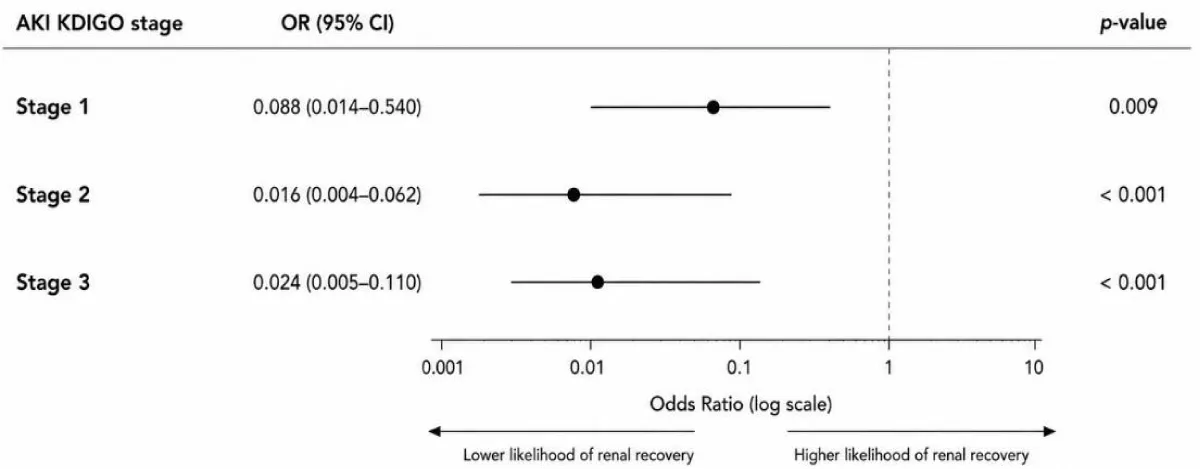
Figure 1: Association between pre-existing CKD and renal recovery according to AKI KDIGO stage. Models were adjusted for age, sex, hypertension, diabetes mellitus, cardiovascular disease, ICU stay, duration of hospitalisation, and hemodialysis requirement (included in the KDIGO stage 3 model).
Stratified analyses according to CKD stage showed that, among patients without pre-existing CKD, older age (OR 0.975, 95% CI 0.958–0.992; p = 0.005), underlying cardiovascular disease (OR 0.271, 95% CI 0.092–0.796; p = 0.018), and longer hospital stay (OR 0.410, 95% CI 0.225–0.748; p = 0.004) were independently associated with poorer renal recovery. No independent predictors were identified among patients with CKD stage 3, whereas multivariable analysis in CKD stage 4 did not yield reliable estimates because of the limited sample size.
Risk factors associated with mortality
Univariate analysis of mortality showed that neither age (p = 0.3), nor sex (p = 0.4), nor diabetes (p = 0.17), nor hypertension (p = 0.12), nor chronic kidney disease (p = 0.2), nor the type of AKI (p = 0.5) were factors associated with mortality. In contrast, the presence of heart disease (p < 0.001), anuria (p < 0.001), stage 3 AKI (p < 0.001), ICU admission (p < 0.001), and the use of hemodialysis (p < 0.001) were significantly associated with mortality. ROC analysis of hemodynamic parameters revealed low individual discriminatory power (SBP: AUC = 0.394; DBP: AUC = 0.469; HR: AUC = 0.534). Among laboratory parameters, only serum creatinine at admission demonstrated acceptable discriminatory power (AUC = 0.723), with an optimal cutoff of 478 µmol/L (sensitivity 75%, specificity 66%) according to the Youden criterion.
Multivariate analysis using binary logistic regression (Table 9), including heart disease, intensive care unit (ICU) admission, hemodialysis, urine output, serum creatinine at admission, and stage of acute kidney injury (AKI), identified three factors independently associated with mortality: pre-existing heart disease (OR = 3.89; 95% CI [1.99–7.59]; p < 0.001), ICU stay (OR = 3.62; 95% CI [1.42–9.25]; p = 0.007), and serum creatinine at admission (OR = 1.001; 95% CI [1.000–1.002]; p = 0.010). The use of hemodialysis (p = 0.158), urine output (p = 0.060), and stage of AKI (p = 0.186) did not reach the threshold of significance.
| Table 9: Multivariate analysis of independent factors associated with mortality during AKI | |||
| Variable | p | Odds Ratio | 95% CI |
| Heart disease | < 0.001 | 3.89 | [1.99 – 7.59] |
| Stay in intensive care (ICU) | 0.007 | 3.62 | [1.42 – 9.25] |
| Use of hemodialysis | 0.158 | 1.72 | [0.81 – 3.65] |
| Diuresis | 0.060 | 0.67 | [0.44 – 1.02] |
| Serum creatinine on admission | 0.010 | 1.001 | [1.000 – 1.002] |
| Stage of AKI | 0.186 | 1.82 | [0.75 – 4.44] |
| AKI: acute kidney injury; ICU: intensive care unit. An OR > 1 indicates a risk factor for mortality. Significant values are shown in grey (p < 0.05). | |||
Stratified analyses according to CKD stage showed that no reliable conclusions could be drawn for patients with CKD stage 2 because of the very small sample size. Among patients with CKD stage 3, intensive care unit admission was the only independent predictor of mortality (OR 154.82, 95% CI 2.10–11407.71; p = 0.022). In patients with CKD stage 4, underlying cardiovascular disease (OR 5.73, 95% CI 1.76–18.74; p = 0.004), intensive care unit admission (OR 20.35, 95% CI 1.60–257.98; p = 0.020), and the need for hemodialysis (OR 3.06, 95% CI 1.01–9.25; p = 0.047) were independently associated with mortality.
In our study, the mean age of hospitalized patients was 67.9 years, with extremes ranging from 18 to 96 years, which is consistent with findings reported in other North African and international studies, where a predominance of elderly subjects was also observed, with mean ages of 67 years, 61 years, and 67 years, respectively, in the studies conducted by Gursu et al., Magboul et al., and Hwang, et al. [6-8].
This trend may be explained by the increased vulnerability associated with physiological ageing of the kidney, as well as the high prevalence of comorbidities accumulated in this age group [9,10].
In contrast to our study, we observed a slight female predominance (sex ratio [M/F] 0.91). Other studies report male predominance, as illustrated by the Saudi study conducted by Maha K. Alghamdi et al., where male prevalence reached 58% [11-13].
This discrepancy may be explained by differences in hospital recruitment patterns, as well as certain sociocultural factors and potential selection bias in our study, which was limited to patients hospitalised for AKI in a nephrology department.
Our findings demonstrate a significant prevalence of hypertension (71.4%) and diabetes (49.5%), primarily type 2. These results are in accordance with other published studies, such as those conducted by Selmi et al. and Li et al., where hypertension and diabetes were documented in 69–73% and 35–48% of cases, respectively [3,14].
Several pathophysiological mechanisms may explain the increased susceptibility of hypertensive and diabetic patients to develop AKI, including impaired renal autoregulation and oxidative stress in hypertension [15,16], as well as microvascular and macrovascular damage related to diabetes and pre-existing diabetic nephropathy lesions [17,18].
A particularly notable finding in our study is the high prevalence of pre-existing chronic kidney disease (55.9%) among patients who developed AKI.
The predominance of advanced stages (stages 3 and 4) in our cohort highlights the severity of baseline renal impairment in these patients. Similar findings have been reported in several studies, confirming that pre-existing chronic kidney disease is a major risk factor for the occurrence of AKI [19,20].
This association can be explained by the reduction in nephron reserve and the decreased capacity of the kidney to adapt to hemodynamic and toxic insults.
In our study, infections emerged as the leading triggering factor, accounting for 54.7% of cases. This finding aligns with existing literature, particularly in developing countries. Notably, a study by Perez et al. in Mexico clearly demonstrates that infectious etiologies are predominant, with reported frequencies between 40% and 60%, depending on the series analysed [21,22].
Digestive disorders, mainly diarrhoea and vomiting, were the second most frequent precipitating factor (30.6%). These findings are consistent with those reported by Selmi, et al. [3], highlighting the central role of hypovolemia in the pathogenesis of functional AKI.
Exposure to nephrotoxic agents, particularly NSAIDs and iodinated contrast media, was also observed in our study, although at lower frequencies. Similar observations have been described in several studies, where drug-induced AKI represents a significant but preventable proportion of cases [23,24].
The high prevalence of renin–angiotensin system blockers and diuretic use in our population further supports their role as contributing factors, especially in situations of dehydration or hemodynamic instability.
At admission, a significant proportion of patients presented with hemodynamic disturbances, including hypotension and tachycardia. These findings are consistent with those reported in other hospital-based studies, where hemodynamic instability is frequently associated with AKI [25,26].
Clinical signs of extracellular dehydration were frequently observed, reflecting the predominance of functional AKI in our series. Conversely, fluid overload was also noted in a substantial proportion of patients, illustrating the heterogeneity of clinical presentations.
From a biological standpoint, our patients presented with severe renal impairment at admission, as reflected by elevated serum creatinine levels and reduced eGFR. Similar levels of renal dysfunction at presentation have been reported in other studies [27,28].
Metabolic complications, particularly metabolic acidosis and hyperkalemia, were common in our cohort, consistent with the severity of AKI. These abnormalities have also been widely reported in the literature [29,30].
Elevated inflammatory markers, particularly CRP, were observed in the majority of patients, reflecting the high prevalence of infectious triggers. Anaemia was also highly prevalent, which may be explained by the coexistence of chronic kidney disease and acute illness.
In our study, functional AKI was the most frequent form, mainly related to hypovolemia and cardiorenal syndrome. These findings are consistent with those reported in several studies, particularly in hospital settings, where functional AKI remains predominant [31,32].
Organic AKI accounted for a significant proportion of cases, with a predominance of acute interstitial nephritis, followed by acute tubular necrosis and glomerular diseases. This distribution differs from that reported in some series, where acute tubular necrosis is the leading cause of intrinsic AKI [33,34].
This discrepancy may be explained by differences in recruitment settings, particularly the inclusion of patients from nephrology departments, where immuno-allergic and glomerular etiologies are more frequently encountered.
Obstructive AKI was less frequent in our study, which is consistent with most published series, where it represents a minority of cases but remains an important reversible cause when diagnosed early [35,36].
The relatively high proportion of multifactorial AKI observed in our cohort reflects the complexity of this condition and the frequent coexistence of multiple contributing factors, as reported in other studies [37].
Management of AKI in our study was primarily based on correction of the underlying cause and supportive measures.
Volume expansion was the most frequently used therapeutic intervention, reflecting the predominance of hypovolemia. Similar findings have been reported in other studies, where fluid resuscitation remains the cornerstone of treatment in functional AKI [38,39].
Diuretics were used mainly in cases of fluid overload. Their use remains debated in the literature, particularly regarding their impact on renal recovery, but they are commonly prescribed for symptomatic management [40].
Pre-admission RAS inhibitor use was not independently associated with renal recovery, AKI recurrence, or mortality after multivariable adjustment, suggesting that the apparent survival benefit observed in univariate analysis was largely explained by baseline patient characteristics. This finding is consistent with the study by Ambrus et al., which reported no association between pre-admission ACEI/ARB use and AKI severity or mortality among critically ill patients with septic shock, and with the large population-based study by Mansfield, et al., showing that the association between RAS inhibitors and AKI outcomes is strongly influenced by patients’ baseline risk profile [41,42].
Although in-hospital diuretic therapy was independently associated with poorer renal recovery, diuretic dosage was not independently associated with renal recovery or mortality after adjustment. These findings likely reflect confounding by indication, whereby patients requiring diuretic therapy had more severe clinical presentations rather than a direct adverse effect of higher diuretic doses. Similarly, a meta-analysis by Krzych, et al. including 20 randomised controlled trials (2,608 patients with AKI) found no significant benefit of diuretic therapy on mortality or the need for kidney replacement therapy, regardless of diuretic strategy or dose [43].
Vasopressors were required in a minority of patients, reflecting cases of hemodynamic instability.
Corticosteroids and other immunosuppressive treatments were used in selected cases, particularly in the presence of immune-mediated renal diseases, in accordance with current recommendations [44,45].
Renal replacement therapy was required in a substantial proportion of patients. This finding is consistent with other studies reporting high rates of dialysis in severe AKI [46,47].
Short-term outcomes in our study showed partial improvement in renal function at discharge; however, a significant proportion of patients progressed to chronic dialysis. Similar findings have been reported in other studies, highlighting the severity of AKI in hospitalised patients [48,49].
The primary site of infection significantly influenced renal recovery and mortality but was not associated with progression to chronic kidney disease. Pulmonary infections were associated with the highest mortality, whereas urinary tract infections showed the most favourable renal recovery. These findings are consistent with those of Fan et al., who reported poorer renal recovery and worse 90-day outcomes in patients with pulmonary sepsis-associated AKI compared with other infectious sources. Similarly, Buckenmayer, et al., in a cohort of 432 patients hospitalised for AKI, found that patients with urosepsis had the shortest hospital stay and the lowest requirement for temporary kidney replacement therapy, whereas pulmonary and other septic foci were associated with more severe clinical courses [50,51].
In the medium and long term, our results showed a progressive increase in the incidence of chronic kidney disease and end-stage kidney disease. These findings are consistent with those reported in the literature, confirming that AKI is a major risk factor for long-term renal impairment [52,53].
The rate of AKI recurrence observed in our study was substantial. Comparable recurrence rates have been reported in other cohorts, supporting the concept of persistent renal vulnerability following an initial episode of AKI [54].
Mortality in our study remained significant, with cardiovascular causes being predominant. This finding is consistent with several studies demonstrating the strong association between AKI and cardiovascular mortality [55,56].
In a binational study by White, et al., it was found that pre-existing renal impairment significantly increases the susceptibility to recurrent episodes of AKI (rates of 35.1% vs 28.8%, p < 0.001). In our study, chronic kidney disease was identified as an independent risk factor for AKI recurrence. Similar findings have been reported in other studies, reinforcing the link between renal impairment and the increased likelihood of recurrent AKI episodes [57,58].
Conversely, hemodialysis appeared to have a protective effect against recurrence. This finding has also been reported in some studies and may be explained by closer follow-up and stricter medical monitoring in these patients [59].
Several factors were associated with renal recovery in univariate analysis; however, only pre-existing chronic kidney disease remained independently associated with poor renal outcome in multivariate analysis.
Subgroup analyses demonstrated that the adverse effect of pre-existing CKD on renal recovery remained significant across all KDIGO stages. This finding suggests that underlying CKD is a robust predictor of poor renal recovery independently of the severity of the index AKI episode. The consistency of these associations across stratified analyses further supports the prognostic value of pre-existing CKD in patients hospitalised with AKI.
This result is consistent with findings from other studies, which highlight the central role of baseline renal function in determining renal prognosis after AKI [60,61].
In our study, cardiac disease was the only factor significantly associated with mortality. Similar findings have been reported in several studies, emphasising the impact of cardiovascular comorbidities on the prognosis of patients with AKI [62,63].
Other variables, including age, diabetes, and chronic kidney disease, were not significantly associated with mortality in our cohort, which is in agreement with some published data but contrasts with other studies where these factors were identified as predictors of mortality [64,65].
Comparison of patients retained and lost to follow-up demonstrated that the 5-year cohort remained comparable with respect to several baseline demographic characteristics, chronic kidney disease, diabetes, and pre-admission treatments. However, patients retained at follow-up were younger and had significantly less severe AKI at presentation, with lower KDIGO stages, reduced need for hemodialysis, and less frequent catecholamine use. These findings suggest the presence of attrition (survivor) bias, whereby patients with more severe AKI were less likely to survive or remain available for long-term assessment. Consequently, the 5-year cohort cannot be considered fully representative of the original study population, and long-term renal outcomes should be interpreted with appropriate caution.
This study has several limitations. First, its retrospective, single-centre design may have introduced selection bias and incomplete data collection. Second, only patients admitted to the nephrology department were included, excluding patients managed in other hospital departments or in the outpatient setting. Consequently, the study population mainly consisted of patients with more severe AKI, which may limit the generalizability of our findings to the overall AKI population. In addition, long-term follow-up was unavailable for a substantial proportion of patients, potentially introducing attrition bias despite the comparison of baseline characteristics between patients with and without 5-year follow-up. Finally, multicenter prospective studies including patients from different healthcare settings are needed to validate the present findings and improve their external validity.
Future prospective multicenter studies involving diverse healthcare settings across Tunisia and North Africa are warranted to validate these findings and improve their generalizability.
Acute kidney injury remains a frequent and severe condition in nephrology practice, particularly in elderly patients with multiple comorbidities.
In our study, AKI was mainly functional and frequently related to hypovolemia and infectious conditions. However, intrinsic renal causes, particularly interstitial nephritis, were also common, reflecting the diversity of etiologies encountered in nephrology settings.
The short-, medium-, and long-term outcomes highlight the significant risk of progression to chronic kidney disease and end-stage kidney disease, as well as the high rate of recurrence.
Pre-existing chronic kidney disease emerged as a major determinant of both renal prognosis and recurrence, while cardiovascular comorbidities played a key role in mortality.
These findings emphasise the importance of early identification of at-risk patients, prompt management of precipitating factors, and close follow-up after an episode of AKI to improve renal outcomes and reduce morbidity and mortality.
Data availability statement
The datasets generated and/or analysed during the current study are not publicly available because they contain potentially identifiable patient information but are available from the corresponding author on reasonable request and subject to institutional approval.
Ethical approval
The study was conducted in accordance with the Declaration of Helsinki and approved by the local Ethics Committee of Hedi Chaker University Hospital. Given the retrospective design, the requirement for informed consent was waived.
Acknowledgements
The authors thank the medical and nursing staff of the Department of Nephrology, Hedi Chaker University Hospital, Sfax, Tunisia, for their contribution to patient care and data collection.
- Mehta RL, Cerdá J, Burdmann EA, Tonelli M, García-García G, Jha V, et al. International Society of Nephrology’s 0by25 initiative for acute kidney injury (zero preventable deaths by 2025): a human rights case for nephrology. The Lancet. 2015 Jun 27;385(9987):2616-43. Available from: https://doi.org/10.1016/s0140-6736(15)60126-x
- Bahloul M, Ben Hamida C, Damak H, Kallel H, Ksibi H, Rekik N, et al. Incidence and prognosis of acute kidney injury in intensive care. Retrospective study of 216 cases. Tunisian Medical Journal. 2003 Apr;81(4):250-7.
- Selmi Y, Ariba YB, Labidi J. Epidemiology, diagnosis, and aetiology of acute kidney injury in the elderly: A retrospective analysis. Saudi J Kidney Dis Transplant Off Publ Saudi Cent Organ Transplant Saudi Arab. 2019;30(3):678-85. Available from: https://doi.org/10.4103/1319-2442.261344
- Hatakeyama Y, Horino T, Nagata K, Matsumoto T, Terada Y, Okuhara Y. Transition from acute kidney injury to chronic kidney disease: a single-centre cohort study. Clin Exp Nephrol. 2018 Dec;22(6):1281-93. Available from: https://doi.org/10.1007/s10157-018-1571-5
- Fernandes AR, Viegas MSR, Soares EQ, Coelho SS, Valério P, Barreto JC, et al. Outcomes of acute kidney injury in a nephrology ward. Int Urol Nephrol. 2017 Dec;49(12):2185-93. Available from: https://doi.org/10.1007/s11255-017-1716-6
- Gursu M, Yegenaga I, Tuglular S, Dursun B, Bek SG, Bardak S, et al. Acute kidney injury in Turkey: epidemiological characteristics, aetiology, clinical course, and prognosis. BMC Nephrol. 2022 Oct 5;23(1):326. Available from: https://doi.org/10.1186/s12882-022-02933-1
- Magboul SM, Osman B, Elnour AA. The incidence, risk factors, and outcomes of acute kidney injury in the intensive care unit in Sudan. Int J Clin Pharm. 2020 Dec;42(6):1447-55. Available from: https://doi.org/10.1007/s11096-020-01147-5
- Hwang S, Park H, Kim Y, Kang D, Ku HS, Cho J, et al. Changes in acute kidney injury epidemiology in critically ill patients: a population-based cohort study in Korea. Ann Intensive Care. 2019 Jun 7;9(1):65. Available from: https://doi.org/10.1186/s13613-019-0534-7
- Chang-Panesso M. Acute kidney injury and ageing. Pediatr Nephrol Berl Ger. 2021 Oct;36(10):2997-3006. Available from: https://doi.org/10.1007/s00467-020-04849-0
- Yokota LG, Sampaio BM, Rocha EP, Balbi AL, Prado IRS, Ponce D. Acute kidney injury in elderly patients: narrative review on incidence, risk factors, and mortality. Int J Nephrol Renov Dis. 2018 Aug 14;11:217-24. Available from: https://doi.org/10.2147/ijnrd.s170203
- Alghamdi MK, Alhozali HM, Bokhary OA, Ahmed RA, Alghamdi AA, Almalki WS, et al. Impact of Early Nephrology Referral on the Outcomes of Patients with Acute Kidney Injury. Saudi J Med Med Sci. 2022;10(3):221-226. Available from: https://doi.org/10.4103/sjmms.sjmms_576_21
- Haffane L, Bezzaz A, Elouazzani H, Benamer L, Ezaitouni F, Alhamany Z, et al. Acute kidney injury: epidemiology and prognostic factors. Nephrology Therapeutics. 2012 Sep;8(5):340-1.
- Dlamini TAL, Heering PJ, Chivese T, Rayner B. A prospective study of the demographics, management, and outcome of patients with acute kidney injury in Cape Town, South Africa. PLOS ONE. 2017 Jun;12(6):e0177460. Available from: https://doi.org/10.1371/journal.pone.0177460
- Li Q, Zhao M, Zhou F. Hospital-acquired acute kidney injury in very elderly men: clinical characteristics and short-term outcomes. Ageing Clin Exp Res. 2020 Jun;32(6):1121-8. Available from: https://doi.org/10.1007/s40520-019-01196-5
- De Bhailis ÁM, Kalra PA. Hypertension and the kidneys. Br J Hosp Med. 2022 May 2;83(5):1-11. Available from: https://doi.org/10.12968/hmed.2021.0440c
- Arendshorst WJ, Vendrov AE, Kumar N, Ganesh S, Madamanchi N. Oxidative Stress in Kidney Injury and Hypertension. Antioxidants. 2024 Nov;13(12):1454. Available from: https://doi.org/10.3390/antiox13121454
- Wang Y, Jin M, Cheng CK, Li Q. Tubular injury in diabetic kidney disease: molecular mechanisms and potential therapeutic perspectives. Front Endocrinol. 2023 Aug 2;14:1238927. Available from: https://doi.org/10.3389/fendo.2023.1238927
- Wu G, Ye Y, Xu M, Zhang Y, Lu Z, Huang L. Influencing factors of acute kidney injury in elderly patients with diabetic nephropathy and establishment of a nomogram model. Front Endocrinol. 2025 Jan 30;15:1-8. Available from: https://doi.org/10.3389/fendo.2024.1431873
- Tejera D, Varela F, Acosta D, Figueroa S, Benencio S, Verdaguer C, et al. Epidemiology of acute kidney injury and chronic kidney disease in the intensive care unit. Brazilian Journal of Intensive Therapy. 2017;29:444-52. Available from: https://doi.org/10.5935/0103-507x.20170061
- Tassew WC, Birhan N, Zewdu Y. Incidence and Predictors of Acute Kidney Injury Among Newly Diagnosed Type 2 Diabetes Patients at Chronic Follow-Up Clinic of University of Gondar Comprehensive Specialised Hospital: A Retrospective Follow-Up Study. Res Rep Urol. 2021 Aug 24;13:613-22. Available from: https://doi.org/10.2147/rru.s306467
- Stucker F, Ponte B, De la Fuente V, Alves C, Rutschmann O, Carballo S, et al. Risk factors for community-acquired acute kidney injury in patients with and without chronic kidney injury and impact of its initial management on prognosis: a prospective observational study. BMC Nephrol. 2017 Dec 29;18(1):380. Available from: https://doi.org/10.1186/s12882-017-0792-2
- Peerez JAP, Marín FAR. Acute kidney injury as an independent risk factor for developing chronic kidney disease: A single-centre observational study. Journal of the Ecuadorian Society of Nephrology, Dialysis and Transplantation. 2025;13(1):11-9.
- Ben Mahmoud N, Mouna H, Jihène M, Ben SM, Ben SM, Ahmed L, et al. Clinical and Epidemiological Profile of Reversible Acute Kidney Injury with Full Recovery: Experience of a Nephrology Department. J Clin Nephrol. 2023;1114:1-3. Available from: https://doi.org/10.29328/journal.jcn.1001114
- Tang X, Chen D, Yu S, Yang L, Mei C, Consortium on behalf of IA 0 by 25 C. Acute kidney injury burden in different clinical units: Data from a nationwide survey in China. PLOS ONE. 2017 Feb;12(2):e0171202. Available from: https://doi.org/10.1371/journal.pone.0171202
- Porta JMP, Babara A, Saumell MP, Mayor PJ, Alvarado J, Gil PI. #327 Impact of outpatient medication on community-acquired acute kidney injury. Nephrol Dial Transplant. 2024 May 23;39(Supplement_1):gfae069-1780-327. Available from: https://doi.org/10.1093/ndt/gfae069.1780
- Mayor PJ, Porta JMP, Saumell MP, Babara A, Alvarado J, Gil PI. #1786 Correlation of electrolyte disturbances in community-acquired acute kidney injury. Nephrol Dial Transplant. 2024 May 23;39(Supplement_1):gfae069-1159-786. Available from: https://doi.org/10.1093/ndt/gfae069.1159
- Silver SA, Goldstein SL, Harel Z. Ambulatory care after acute kidney injury: an opportunity to improve patient outcomes. Canadian Journal of Kidney Health and Disease. 2015 Oct;2:36. Available from: https://doi.org/10.1186/s40697-015-0071-8
- Ruiz-Criado J, Ramos-Barron M, Fernández‐Fresnedo G, Rodrigo E, Francisco ÁD de, Arias M, et al. Long-Term Mortality among Hospitalised Non-ICU Patients with Acute Kidney Injury Referred to Nephrology. Nephron. 2015;131:23-33. Available from: https://doi.org/10.1159/000437340
- Ponce D, Zorzenon C, Santos NY dos, Balbi A. Early nephrology consultation can have an impact on the outcome of acute kidney injury patients. Nephrol Dial Transplant Off Publ Eur Dial Transpl Assoc - Eur Ren Assoc. 2011;26(10):3202-6. Available from: https://doi.org/10.1093/ndt/gfr359
- Schwartz L, Rosenshtok O, Shalev L, Schneider E, Basok A, Vorobiov M, et al. Admission of kidney patients to a closed staff nephrology department results in better short-term survival. PLOS ONE. 2023 Mar 7;18(3):e0279172. Available from: https://doi.org/10.1371/journal.pone.0279172
- Tso M, Sud K, Van C, Patekar A, Tesfaye W, Castelino RL. Hospital-Acquired Acute Kidney Injury in Noncritical Care Setting: Clinical Characteristics and Outcomes. Int J Clin Pract. 2022 May 16;2022:7077587. Available from: https://doi.org/10.1155/2022/7077587
- Smart NA, Dieberg G, Ladhani M, Titus T. Early referral to specialist nephrology services for preventing the progression to end-stage kidney disease. Cochrane Database Syst Rev. 2014 Jun 18;(6): CD007333. Available from: https://doi.org/10.1002/14651858.cd007333.pub2
- Rhee H, Park M, Kim IY. Nephrology consultation improves the clinical outcomes of patients with acute kidney injury. Kidney Res Clin Pract. 2023;44:102-10. Available from: https://doi.org/10.23876/j.krcp.23.039
- Hoste EAJ, Bagshaw SM, Bellomo R, Cely CM, Colman R, Cruz DN, et al. Epidemiology of acute kidney injury in critically ill patients: the multinational AKI-EPI study. Intensive Care Med. 2015 Aug;41(8):1411-23. Available from: https://doi.org/10.1007/s00134-015-3934-7
- Prasad N, Jaiswal A, Meyyappan J, Gopalakrishnan N, Chaudhary AR, Fernando E, et al. Community-acquired acute kidney injury in India: data from ISN-acute kidney injury registry. Lancet Reg Health - Southeast Asia. 2024 Jan 25;21:100359. Available from: https://doi.org/10.1016/j.lansea.2024.100359
- Pešić S, Čučković Č, Stopic B, Dimkovic N, Naumović R. #3600 Acute kidney injury in the elderly: differences over time. Nephrol Dial Transplant. 2023;38(1):1-4.
- Kobus G, Małyszko J, Bachórzewska-Gajewska H. Acute kidney injury in elderly patients. Wiadomości Lekarskie. 2019 Aug 31;72(8):1466-72.
- Nacasch N, Sarel E, Rozenberg I, Ayzenfeld RH, Greenberg M, Erez D, et al. Acute Kidney Injury and Rehabilitation Outcomes among Elderly Patients with Chronic Kidney Disease. Kidney Blood Press Res. 2023;48:777-84. Available from: https://doi.org/10.1159/000534013
- Xu L, Sun P. Identification and management of sepsis associated‑acute kidney injury. Zhonghua Wei Zhong Bing Ji Jiu Yi Xue. 2023 Feb;35(2):221-4. Available from: https://doi.org/10.3760/cma.j.cn121430-20220808-00725
- Sivakumar S, Elavazhagan B. A study on acute kidney injury in the intensive care setting. IOSR J Dent Med Sci. 2016 Oct;15(10):40–51. Available from: https://doi.org/10.9790/0853-1510044051
- Ambrus C. Pre-admission ACEI/ARB therapy was not associated with severe AKI or mortality in septic shock patients. Nephrol Dial Transplant. 2022;37(Suppl 3):gfac068.049. Available from: https://doi.org/10.1093/ndt/gfac068.049
- Mansfield KE. Risk of acute kidney injury associated with the use of renin–angiotensin system inhibitors: a population-based cohort study. BMJ Open. 2016. Available from: https://doi.org/10.1136/bmjopen-2016-012690
- Krzych ŁJ. Loop diuretics in acute kidney injury prevention, therapy and risk stratification: a systematic review and meta-analysis of randomised controlled trials including 2,608 patients. Ann Intensive Care. 2019;9:85. Available from: https://doi.org/10.1186/s13613-019-0557-0
- Poston JT, Koyner JL. Sepsis-associated acute kidney injury. BMJ. 2019 Jan;364:k4891. Available from: https://doi.org/10.1136/bmj.k4891
- Agrawal KK, Raghubanshi P, Bohaju A, Acharya J. Acute Kidney Injury among Patients Visiting the Nephrology Unit in a Tertiary Care Centre: A Descriptive Cross-sectional Study. J Nepal Med Assoc. 2022 Nov 30;60(256):991-994. Available from: https://doi.org/10.31729/jnma.7916
- Alam Chowdhury MR, Bhuiyan BU, Rahman Siddiqui MM, Saad S, Hossain MZ, Alam MS. A Study on aetiology and outcome of acute kidney injury patients requiring haemodialysis in a rural tertiary medical college hospital, Kishoreganj. Anwer Khan Mod Med Coll J. 2023 Mar 7;12(2):98-103.
- Yousif DE, Topping AR, Osman MF, Raimann JG, Osman EM, Kotanko P, et al. Acute Kidney Injury in Sub-Saharan Africa: A Single-Center Experience from Khartoum, Sudan. Blood Purif. 2018;45(1-3):201-207. Available from: https://doi.org/10.1159/000485214
- Chávez-Iñiguez JS, Navarro-Gallardo GJ, Medina-González R, Alcantar-Vallin L, García-García G. Acute Kidney Injury Caused by Obstructive Nephropathy. Int J Nephrol. 2020;2020(1):8846622. Available from: https://doi.org/10.1155/2020/8846622
- Pérez-Aizpurua X, Benavente RC, Serrano GB, Peral JMA, Mañas BGJ, Jaumot JT, et al. Obstructive uropathy: Overview of the pathogenesis, aetiology and management of a prevalent cause of acute kidney injury. World J Nephrol. 2024 Jun 25;13(2):93322. Available from: https://doi.org/10.5527/wjn.v13.i2.93322
- Fan X. Clinical characteristics and outcomes of sepsis-associated acute kidney injury according to the source of infection. World J Emerg Med. 2020;11(1):17-23. Available from: https://doi.org/:10.5847/wjem.j.1920-8642.2020.01.003
- Buckenmayer A. Clinical characteristics and outcomes of acute kidney injury according to the source of infection in patients admitted to a nephrology department. J Nephrol. 2023. Available from: https://doi.org/10.1007/s40620-023-01774-x
- Gameiro J, Fonseca JA, Oliveira J, Marques F, Bernardo J, Costa C, et al. Acute kidney injury in hospitalised patients with COVID-19: A Portuguese cohort. Nefrología. 2021 Nov 1;41(6):689-698. Available from: https://doi.org/10.1016/j.nefro.2021.04.002
- Bellomo R, Kellum JA, Ronco C. Acute kidney injury. The Lancet. 2012 Aug 25;380(9843):756-766. Available from: https://www.thelancet.com/journals/lancet/article/PIIS0140-6736(11)61454-2/abstract
- Brennan M, O’Keeffe S, Mulkerrin E. Dehydration and renal failure in older persons during heatwaves-predictable, hard to identify but preventable? Age Ageing. 2019;148(5):615-618. Available from: https://doi.org/10.1093/ageing/afz080 s
- Sasai F, Roncal-Jiménez C, Rogers K, Sato Y, Brown JM, Glaser J, et al. Climate Change and Nephrology. Nephrol Dial Transplant Off Publ Eur Dial Transpl Assoc - Eur Ren Assoc. 2021 Sep;38(1):41-48. Available from: https://doi.org/10.1093/ndt/gfab258
- Teixeira C, Garzotto F, Piccinni P, Brienza N, Iannuzzi M, Gramaticopolo S, et al. Fluid balance and urine volume are independent predictors of mortality in acute kidney injury. Crit Care. 2013 Feb;17(1):1-11.
- White KC, Serpa-Neto A, Hurford R, Clement P, Laupland KB, Ostermann M, et al. How a positive fluid balance develops in acute kidney injury: A binational, observational study. J Crit Care. 2024 Aug 1;82:154809. Available from: https://doi.org/10.1016/j.jcrc.2024.154809
- Santos RP dos, Carvalho ARS, Peres LAB, Ronco C, Macedo E. An epidemiologic overview of acute kidney injury in intensive care units. Journal of the Brazilian Medical Association. 2019 Sep 12;65:1094-1101. Available from: https://doi.org/10.1590/1806-9282.65.8.1094
- Sharma A, Karki B, Rajbhandari A. Intermittent Hemodialysis For Patients With Acute Kidney Injury (AKI): Outcome in a Tertiary-Level Hospital. Med J Shree Birendra Hosp. 2018 Apr 30;17(1):25-30. Available from: https://doi.org/10.3126/mjsbh.v17i2.18629
- Mahmud HM, Dastoor HDD. Frequency, Co-morbidities, and outcome of acute kidney injury in elderly admitted patients. Pak J Med Sci. 2020 Aug;36(5):920-924. Available from: https://doi.org/10.12669/pjms.36.5.2429
- Chandiraseharan VK, Kalimuthu M, Prakash TV, George T, Rajenesh A, Jayaseelan V, et al. Acute kidney injury is an independent predictor of in-hospital mortality in a general medical ward: A retrospective study from a tertiary care centre in South India. Indian J Med Res. 2020 Oct;152(4):386-92. Available from: https://doi.org/10.4103/ijmr.ijmr_1685_18
- Elouaer Y, Guedri Y, Troudi MR, Azzabi A, Mrabet S, Sahtout W, et al. Epidemiology and outcome of patients with acute kidney injury requiring dialysis: about 230 cases. Nephrol Dial Transplant. 2021 May 1;36(Supplement_1):gfab082.0049.
- Melo FAF, Burdmann EA, Macedo E, Mehta R, Zanetta DMT. Acute kidney injury developed in the intensive care unit: a population-based prospective cohort study in the Brazilian Amazon. Sci Rep. 2024 Oct 3;14:22954. Available from: https://doi.org/10.1038/s41598-024-74177-y
- Liu KD, Yang J, Tan TC, Glidden DV, Zheng S, Pravoverov L, et al. Risk Factors for Recurrent Acute Kidney Injury in a Large Population-Based Cohort. Am J Kidney Dis. 2019 Feb 1;73(2):163-73. Available from: https://doi.org/10.1053/j.ajkd.2018.08.008
- Holmes J, Geen J, Williams JD, Phillips AO. Recurrent acute kidney injury: predictors and impact in a large population-based cohort. Nephrol Dial Transplant Off Publ Eur Dial Transpl Assoc - Eur Ren Assoc. 2020 Aug 1;35(8):1361-1369. Available from: https://doi.org/10.1093/ndt/gfz155